We came across this post on Instagram:
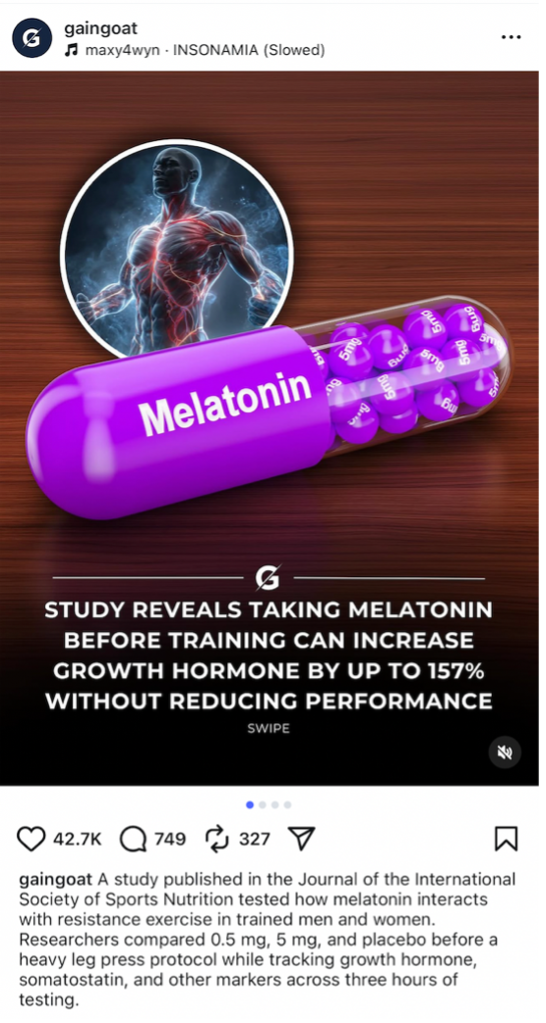
According to the post, which cites a study from the Journal of the International Society of Sports Nutrition (JISSN), “taking melatonin before training can increase growth hormone by up to 157% without reducing performance”.
Melatonin is most commonly known as the “sleep hormone” and is widely used as a supplement to help regulate circadian rhythms and improve sleep quality. Beyond its role in sleep, research shows that melatonin also interacts with the growth hormone (GH) axis. Growth hormone plays an important role in muscle repair, fat metabolism, and recovery, and is typically released during deep sleep.
Looking at the study in question, trained men and women were given either 0.5 mg of melatonin, 5 mg of melatonin, or a placebo before performing a heavy leg press workout. Researchers then measured growth hormone, somatostatin (a hormone that inhibits GH), and other markers. The results showed that melatonin supplementation—especially at the higher 5 mg dose—led to significantly higher growth hormone concentrations compared to placebo. In male participants, growth hormone levels were observed to spike up to around 150% higher than placebo at certain time points. Importantly, exercise performance was not impaired in the short term, as participants were able to complete the leg press workout regardless of melatonin dose.
However, there are important caveats. The study was based on a small sample size (N=60) , and it only tracked short-term hormonal changes. It also did not assess long-term effects of melatonin supplementation such as muscle growth, fat loss, or overall training adaptations. The quoted “157% increase” refers to acute spikes in growth hormone levels, not sustained improvements over time. It is also unclear whether the same effects would apply to untrained individuals or under different exercise conditions.
In short, the claim is partly true but misleading. While melatonin taken before resistance training can acutely increase growth hormone levels in trained individual without harming short-term performance, this does not mean it will lead to better long-term training outcomes. The 157% figure is technically accurate in context, but presenting it as a guaranteed way to boost muscle growth or performance exaggerates what the research actually shows.