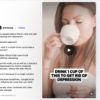
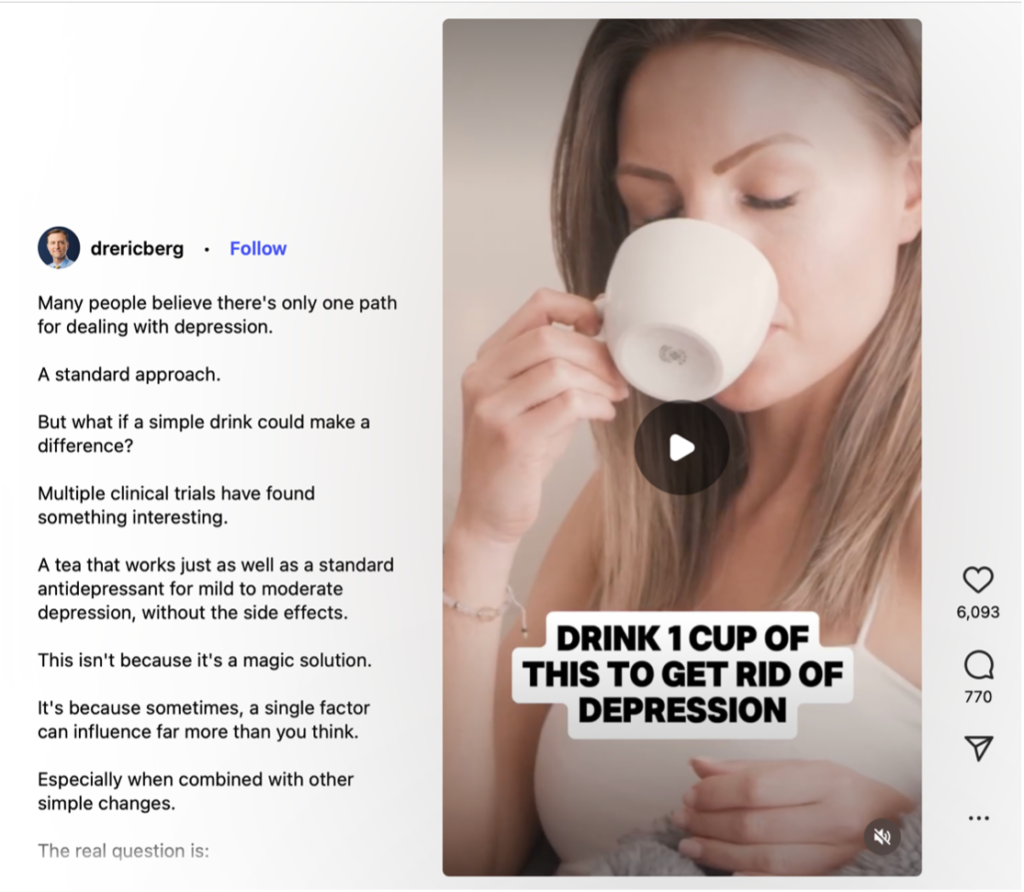
An Instagram reel by Dr Eric Berg, a US chiropractor with over 2.9 million followers, tells viewers that a daily cup of saffron tea can “help get rid of depression”. In the reel, which currently has over 6,000 likes, Berg claims that “multiple clinical trials show” the drink “works as well as a standard antidepressant for mild to moderate depression without side effects”. He advises steeping a small pinch of saffron threads in hot water for ten minutes and drinking one cup in the morning and another in the afternoon. Combined with morning sunlight, a daily walk and cutting out sugar, he says, viewers will see their mood “completely change within a few weeks”.
Is there any truth to this? Berg is right that clinical trials of saffron consumption for depression exist, and some are encouraging. Since 2004, researchers, mostly based in Iran, have run small randomised trials of saffron for mild to moderate depression. A meta-analysis statistically combines data from multiple independent studies into a single large analysis so researchers can look for an overall pattern instead of relying on any one trial. By pooling sample sizes across studies, it detects small or subtle effects that individual, smaller studies might miss. A 2013 meta-analysis of five of these trials found that saffron supplementation reduced depressive symptoms more than a placebo. A 2025 meta-analysis in Nutrition Reviews of nine Iranian trials found no statistically significant difference between saffron and SSRI antidepressants in reducing depressive symptoms, with fewer adverse events reported among those taking saffron.
However, “no significant difference” is not the same as “works as well as”. The trials were small, short and geographically concentrated. The authors of the 2025 analysis also graded how strong the evidence was for each of their two main findings. They rated the evidence that saffron reduces depressive symptoms about as well as SSRIs as moderate, meaning it is fairly convincing but not conclusive. They rated the evidence that saffron causes fewer side effects as low, meaning available evidence is weak and could easily be overturned by more comprehensive studies. The authors of the 2013 analysis called for larger, long-term trials run by teams outside Iran. Canadian guidelines from the Canadian Network for Mood and Anxiety Treatments (CANMAT) in 2016 listed saffron only as a supplementary option for mild to moderate depression, according to a 2018 meta-analysis.
More importantly, these trials did not test tea. They gave participants measured doses, typically around 30 mg a day, of dried saffron in capsules or standardised extracts. Berg’s recipe calls for an unmeasured “small pinch”, and how much of saffron’s active compounds, crocin and safranal, ends up in the cup depends on the size of the pinch, how the saffron was stored and how well the compounds dissolve in the water. As fact-checking site foodfacts.org points out, a randomised trial of saffron tea in postmenopausal women did use a measured 30 mg of saffron a day for six weeks and found a benefit to mood, but it measured happiness rather than depression and was not administered as a blind test. We could not find a trial of Berg’s recipe as a treatment for depression.
The claim that saffron works “without side effects” is also not supported. A systematic review of 102 human trials of saffron in Health Science Reports found that just over half of the trials that reported on safety recorded at least one adverse effect, most commonly gastrointestinal and mostly mild. The authors suggested that clinical monitoring should be considered for higher doses or prolonged use. Foodfacts.org, which reviewed the same paper, also highlights reports of restlessness and hypomania (an elevated, agitated state), as well as limited safety data for pregnancy and for people taking blood thinners. Saffron may be better tolerated than SSRIs, but “fewer side effects” is not “no side effects”.
The rest of Berg’s advice mixes sound general habits with overstatement. Regular walking has good support, including a 2024 analysis of 218 trials that found walking and jogging reduced depressive symptoms, although the authors caution that the quality of evidence varied. Morning daylight is reasonable wellbeing advice, but it is not the same as the clinically dosed bright light therapy used in treatment. The claim that cutting out all sugar will lift mood rests mainly on observational studies, such as a 2024 meta-analysis that linked the highest sugar intakes to 21% higher odds of depression, which cannot show that avoiding sugar treats depression. None of these habits has been tested in combination with saffron tea, and none supports the promise that a person’s mood will “completely change” within weeks. Depression varies widely in severity, and UK guidance from NICE recommends a stepped range of options, ranging from guided self-help and talking therapies to medication where appropriate.
This matters because viewers who treat depression with saffron tea and sunshine instead of evidence-based care may delay or abandon treatment that could help them. Anyone who is struggling with their mood should speak to a doctor or a qualified mental health professional.
Therefore, while it is true that clinical trials of saffron for depression exist and that some are promising, they tested measured capsules and extracts rather than home-brewed tea, were small, short and mostly conducted in Iran, and do not show that saffron is free of side effects or that a person’s mood will transform within weeks.
We rate this claim as misleading.