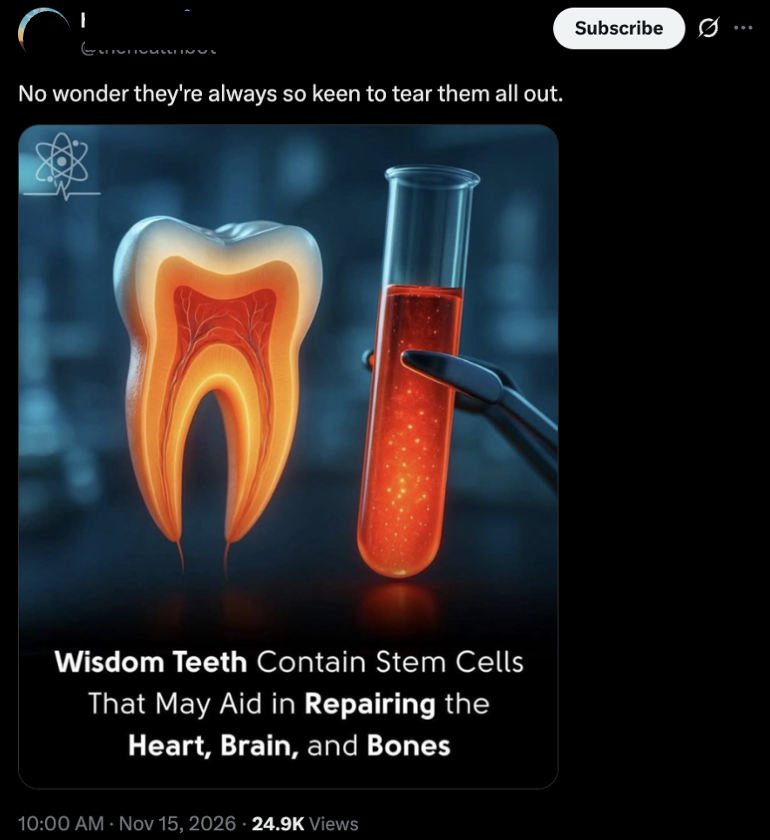
A post on X, which has drawn about 25,000 views, shares a graphic that states that wisdom teeth contain stem cells that may aid in repairing the heart, brain and bones. The post is captioned “No wonder they’re always so keen to tear them all out”, which appears to suggest that wisdom teeth are deliberately removed for their stem cells. This prompted us to take a closer look at the claim in the graphic itself.
Do wisdom teeth contain stem cells?
Stem cells are cells that can make copies of themselves (self-renewal) and develop into specialised cells with different functions (differentiation). They are found in almost all tissues of the body, where they help keep the tissue healthy and repair it after an injury or normal wear and tear.
Wisdom teeth contain dental pulp stem cells, which sit in the pulp, the soft tissue at the centre of the tooth. Much of the research on dental stem cells has looked at whether they could help regenerate tissue, in the teeth and elsewhere in the body. Most of it has been done in laboratories and in animals, with some early human trials.
Can they repair the heart, brain and bones?
Most of the research we found on dental stem cells and the heart, brain and bone comes from laboratory and animal studies. There have been limited human trials explored, specifically for their use in bone regeneration.
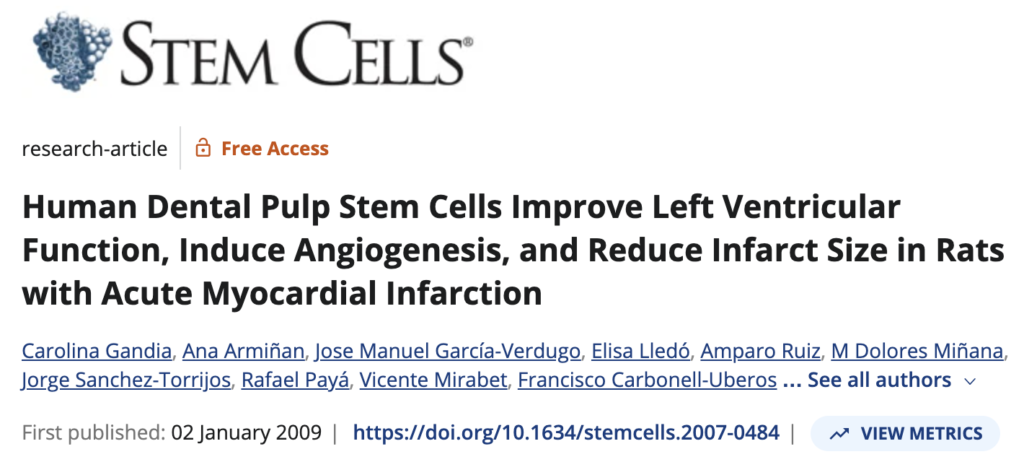
Some animal research has looked at whether dental stem cells could help the heart after a heart attack. A 2008 study injected stem cells from human wisdom teeth into the hearts of rats a week after a heart attack. Four weeks later, the rats had better heart function, a smaller scar and more new blood vessels than rats that did not receive the cells. However, the cells did not appear to become new heart muscle, and the authors suggested they may have released substances that helped blood vessels grow and protected nearby tissue, but said more experiments are needed to confirm this.
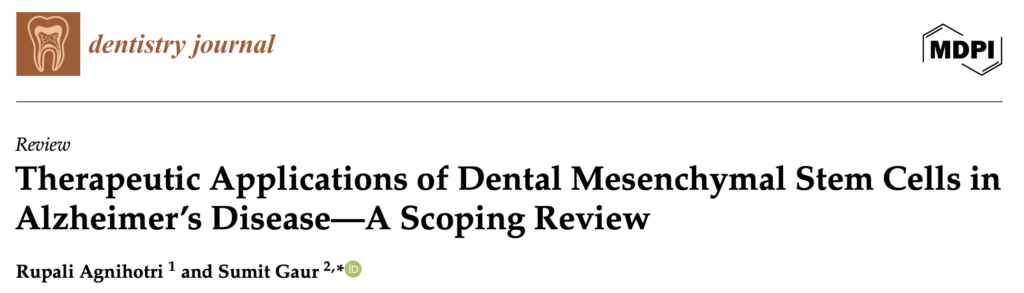
 Dental stem cells have also been tested for Alzheimer’s disease, a condition in which brain cells gradually degenerate, causing dementia and a decline in memory and thinking. A 2025 review in Dentistry Journalexamined 22 papers, including 17 experimental studies, on dental stem cells as a possible treatment for the disease. In lab experiments, dental pulp stem cells developed features of nerve cells, protected nerve cells from damage and reduced inflammation in brain cells. In animal studies, dental stem cells improved memory in rats and mice. The review found no human trials, and its authors describe the findings as preliminary. They say future advances may help find ways to use the cells to regain lost brain cells. For now, it is not known whether these cells could repair brain damage in people.
Dental stem cells have also been tested for rebuilding bones. A 2023 systematic review of 49 animal studies compared bone defects treated with a scaffold, a supporting material that holds cells in place and gives new bone something to grow on, with and without dental stem cells. Scaffolds loaded with the cells generally produced more new bone, although a few studies found no benefit. The authors counted only three human studies that had reported results, all small and only one with a comparison group, and said clinical applications are still at an early stage.
While existing research has explored the potential of dental stem cells in supporting heart, brain and bone regeneration, most findings so far come from laboratory and animal studies. There is currently insufficient clinical evidence to establish whether these cells can effectively repair or regenerate these tissues in humans.
What does Singapore’s regulations say?
In Singapore, the Singapore Dental Council (SDC) does not allow dentists to collect dental pulp for stem cell banking. In a circular dated 1 October 2018, it said dental pulp tissue and dental pulp stem cells “lack clinical evidence for therapeutic use” and are not accepted by local medical and dental professionals as evidence-based therapy. Dentists may not harvest them or help arrange banking. Extracting teeth for non-dental reasons, such as to collect pulp for banking, also breaches the council’s ethical code, countering the implication in the post’s caption. The only exceptions are research, such as clinical trials approved by the Health Sciences Authority, and studies approved under the Human Biomedical Research Act.
Separately, the National University Centre for Oral Health and the NUS Faculty of Dentistry run a tooth tissue bank for research. It keeps teeth donated by patients after extraction, including wisdom teeth, so that researchers do not have to recruit donors for each project. The Straits Times reported that patients who do not donate their tooth can take it home or have it discarded. It also reported that one of the faculty’s researchers is working on using stem cells from extracted teeth to regrow the tooth’s own pulp. He said the approach is being tested in clinical trials worldwide, but that it will be several years before it reaches dental clinics. We found no sign that the bank offers storage or treatment to the public.
Hence, we rate the claim that wisdom teeth contain stem cells that may aid in repairing the heart, brain and bones as partly true. Wisdom teeth do contain dental pulp stem cells, and researchers are studying them. However, the evidence for repairing the heart, brain and bones comes mostly from laboratory and animal studies, and it has not been established in people.

Dentists commonly recommend removing a wisdom tooth when it causes problems. This can happen when the tooth is trapped under the gum (impacted) or has only partly come through. Such teeth can lead to pain, infection, cysts or damage to nearby teeth. Nothing we read suggests that wisdom teeth are deliberately removed for their stem cells.