Posts circulating online claim that contracting measles can protect individuals from cancer, often citing scientific research as supposed evidence.
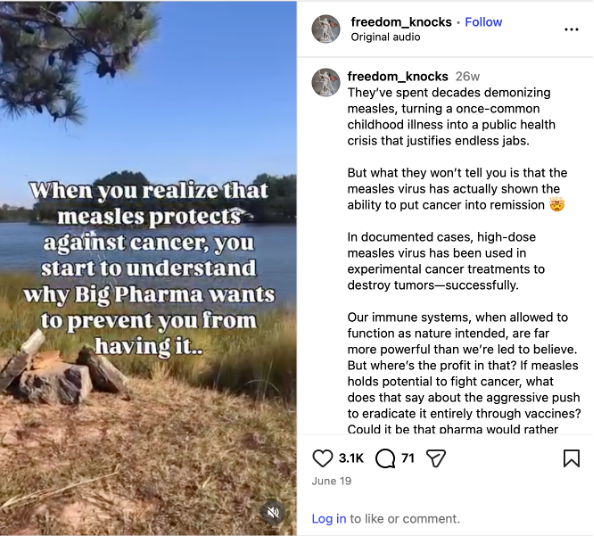
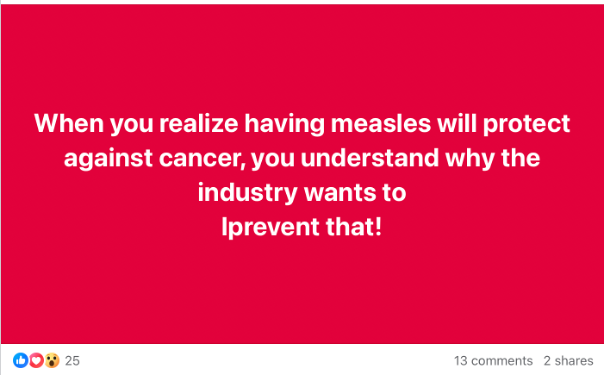
The timing of this narrative is notable. In 2025, Canada lost its measles elimination status after sustained community transmission, while outbreaks continue to be reported across parts of the United States. Public health experts have warned that declining vaccination coverage has contributed to the re-emergence of a disease previously considered under control. In this context, claims reframing measles infection as beneficial may gain traction by downplaying the risks of the virus or casting doubt on established public health guidance.
When we tried to find any studies that reference this claim, we found one from the Mayo Clinic, an American academic medical centre that focuses on integrated research and healthcare. The study from 2009 involved highly controlled laboratory or clinical research using genetically modified measles viruses as part of experimental cancer treatments. Known as oncolytic virus therapy, this approach investigates whether engineered viruses can selectively infect and destroy cancer cells under strict medical supervision. These findings do not demonstrate that a natural, “wild” measles infection provides any protective effect against cancer. In fact, Mayo Clinic in response to growing vaccine hesitancy concerns in the United States, released an article, stating that “there is no evidence that measles infection can protect against cancer”.
In contrast, extensive medical evidence shows that measles is a serious infectious disease that can cause severe complications, including pneumonia, brain inflammation, and death. Measles infection is also known to suppress immune function, increasing susceptibility to other illnesses for months or even years after recovery according to the World Health Organization.
Public health authorities consistently stress that vaccination is the safest and most effective way to prevent measles and its associated risks. Framing measles infection as beneficial not only distorts scientific research but also risks undermining confidence in vaccination programmes at a time when health systems are responding to renewed outbreaks across the region.
This claim reflects a common pattern in health misinformation, where specialised or preliminary scientific research is taken out of context and exaggerated into sweeping conclusions. Without careful verification, such narratives can mislead audiences and encourage behaviour that runs counter to established medical guidance.
There is no credible evidence that contracting measles protects against cancer. The scientific consensus remains clear: measles vaccination is essential for individual and public health protection.