We came across a post circulating on X alleging that genetically modified crops have killed “millions of bees” and advocating for a boycott of GMOs (genetically modified organisms). The post has been viewed thousands of times and circulated among users, prompting us to examine it closely.
According to Singapore’s Genetic Modification Advisory Committee (GMAC), a national advisory body established under the Ministry of Trade and Industry, GMOs are “plants, animals or bacteria whose DNA has been altered using molecular techniques.” The newly introduced DNA provides the organisms with useful traits, such as making crops more resistant to droughts, pests, or certain herbicides, making food production more stable and reliable.
GMOs are widely used today, and in 2023, an estimated 13% of the world’s farmland area was utilised by GM crops. Given the scale of GMO production globally, claims about their environmental impact, especially on important species like bees, may influence public opinion, purchasing decisions, and policy discussions. That prompted us to further review the credibility of the claim.
Why all the buzz around bees?
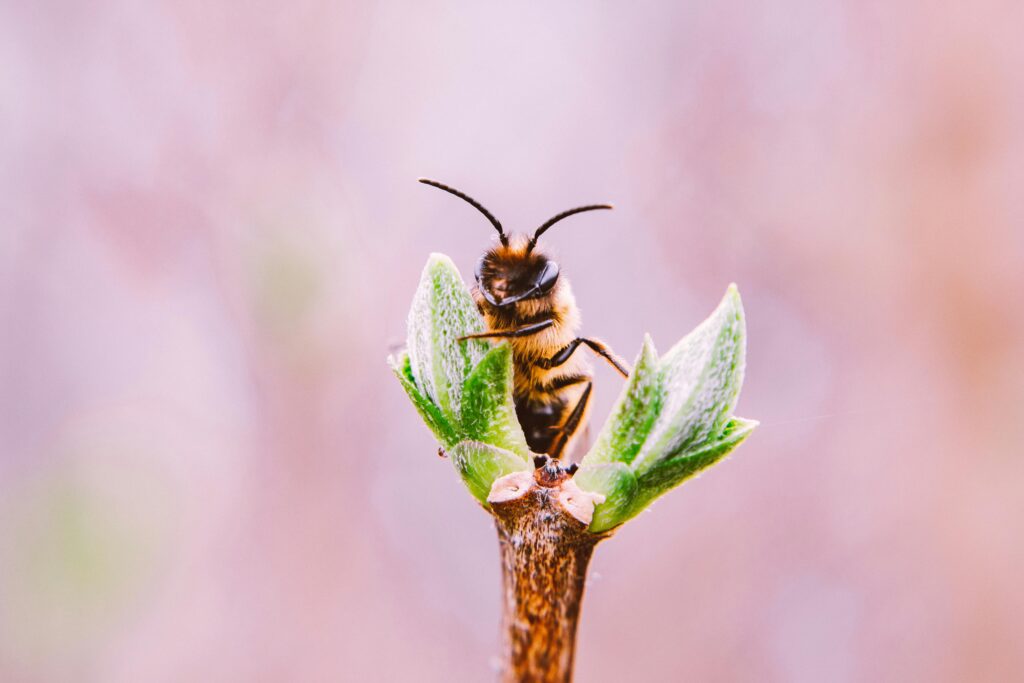
Bees are considered an important component of the food production ecosystem, because they are pollinators, animals that transfer pollen from one flower to another, enabling the fertilisation of many plants, including agricultural crops. They play a key role in the cultivation of crops such as cherries and almonds. According to the World Economic Forum in 2021, about one-third of food production relies on pollinators.
Beyond food production, bees are considered an important environmental bioindicator, species whose health can reflect the overall health of an ecosystem. As they forage, they collect pollutants from the air, soil and water. Honeybees also tend to have ‘high site fidelity’ (i.e. they stay within a small, consistent radius), allowing them to act as a localised health report for a specific area.
Bees are also highly sensitive to environmental stressors such as pesticides and parasites. Even low levels of certain chemicals can disrupt their reproduction or immune systems. Because of this, declines in bee populations can act as an early warning sign that the surrounding environment, including air, soil and water, may be under strain.
Do genetically modified crops harm bees?
The post did not provide any evidence to substantiate its claim that GM crops have killed millions of bees. We therefore reviewed available scientific research and expert assessments to examine whether there is credible evidence linking GM crops to large-scale bee deaths.
Many commercially cultivated GM crops are engineered for two main traits: herbicide tolerance (allowing farmers to spray weeds without killing the crop) and insect resistance.
Insect-resistant varieties often contain genes from the bacterium Bacillus thuringiensis (Bt) to produce specific proteins, known as Cry toxins. These are designed to target certain pests like the corn borer, which can weaken plants and reduce yields.
Extensive scientific reviews have found that approved GM crops do not significantly impact the health of honeybees or bumblebees.
A 2015 scientific review on the potential effects of GM crops concluded there is no consistent evidence that commercially approved GM crops cause lethal harm to honeybees at “field-realistic” exposure levels, meaning the levels bees would actually encounter under normal farming conditions.

Similarly, a 2021 peer-reviewed study in Environmental Sciences Europe reviewing EU biosafety assessments found that insect-resistant GM crops are unlikely to pose significant risks to pollinators under real-world conditions.
What is actually driving bee decline?
Scientific bodies such as the Intergovernmental Science-Policy Platform on Biodiversity and Ecosystem Services (IPBES), a global organisation that brings governments together to help guide policies that protect ecosystems, describe pollinator decline as the result of a “perfect storm” of multiple stressors. These include habitat loss, where wild meadows are replaced by miles of single-crop farmland, and the spread of parasites.
For instance, researchers from the US Department of Agriculture have identified viruses associated with Miticide Resistant Parasitic Mites as the leading driver of colony collapse among honeybees in 2025.
While agricultural practices can influence environmental health, there is no strong scientific evidence that GM crops alone have killed “millions of bees.” Current research points instead to a complex mix of land use changes, chemical exposure, diseases and the changing climate.
Taken together, the available evidence does not support the claim that genetically modified crops have killed “millions of bees”, making it likely false.

Claims about GM crops can sound alarming because the science is technical, making it easier for misleading posts to use dramatic phrases like “killing millions of bees” to grab attention, especially on an issue many environmentally conscious readers care about. But complex scientific topics are rarely captured accurately in a single viral post. Readers should look beyond the headline and check for credible sources before believing, sharing, or changing their purchasing decisions, such as avoiding GM foods, which are widely assessed for safety and are often affordable due to lower farming costs.