We came across the following series of posts on Instagram:
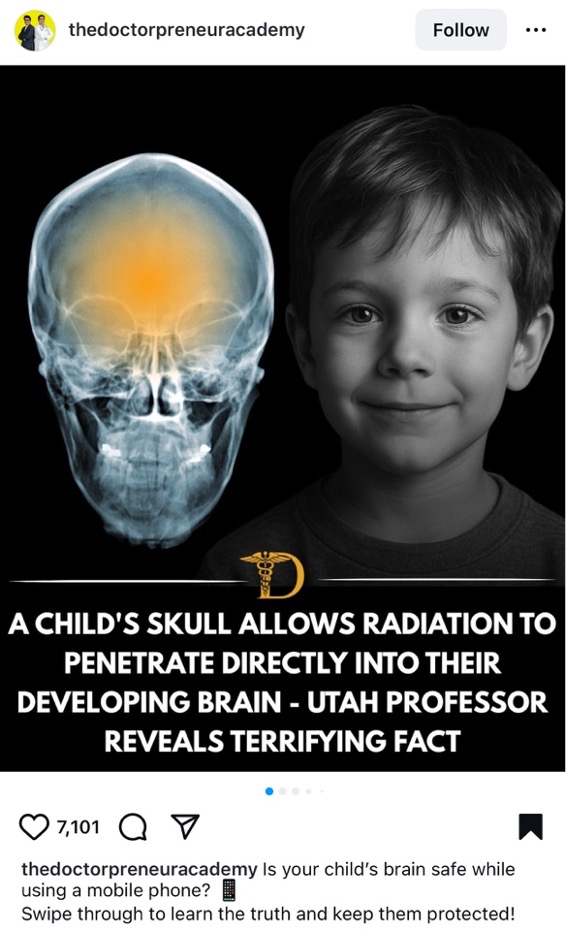
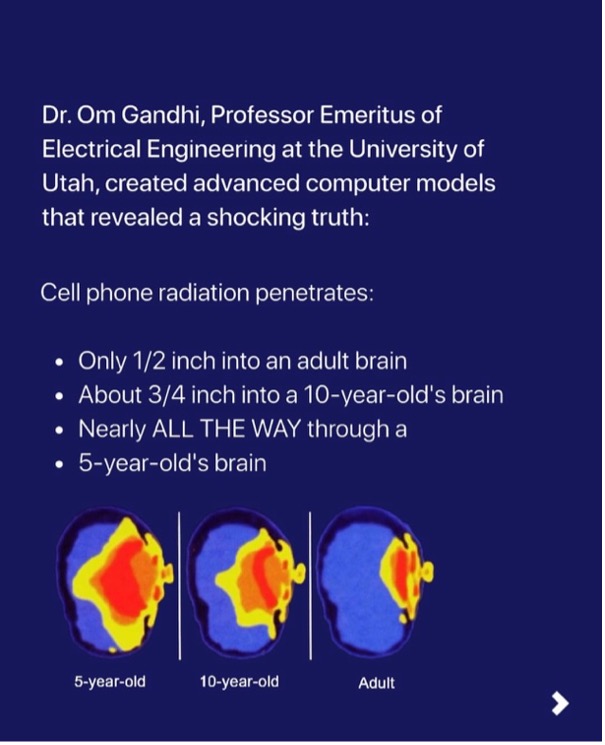
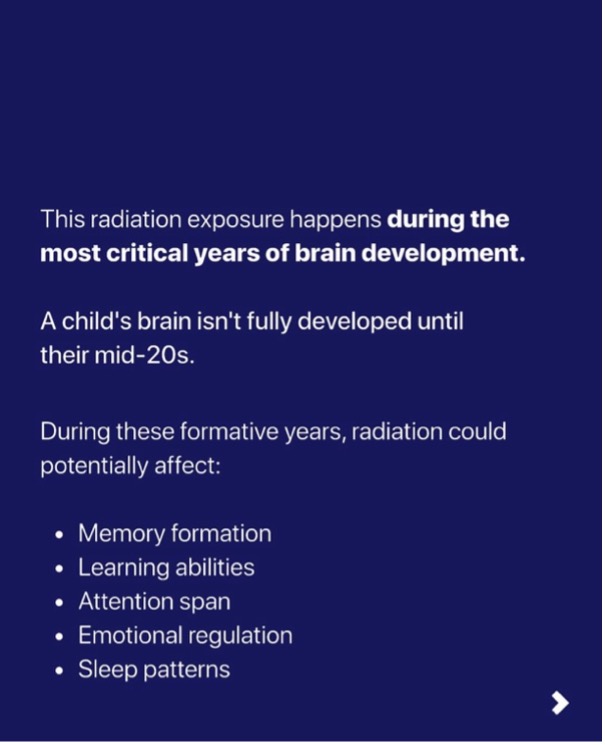
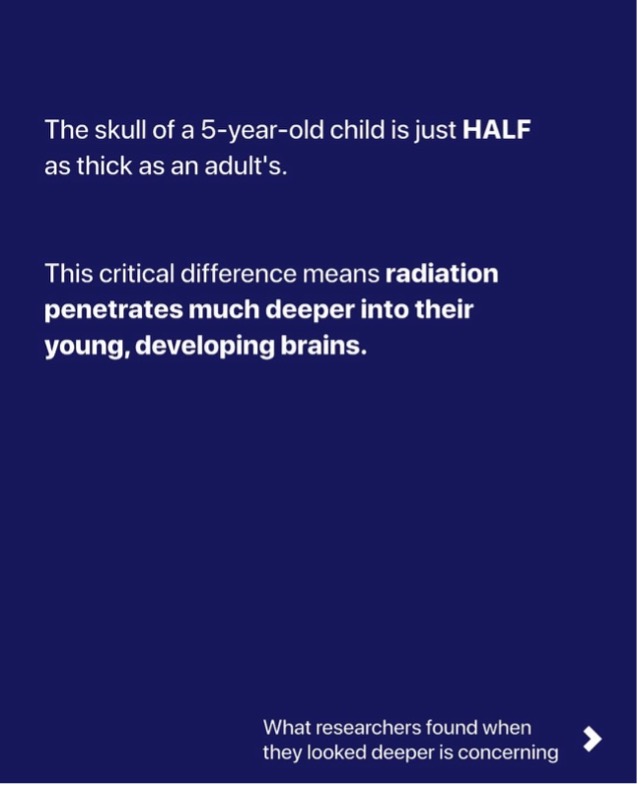
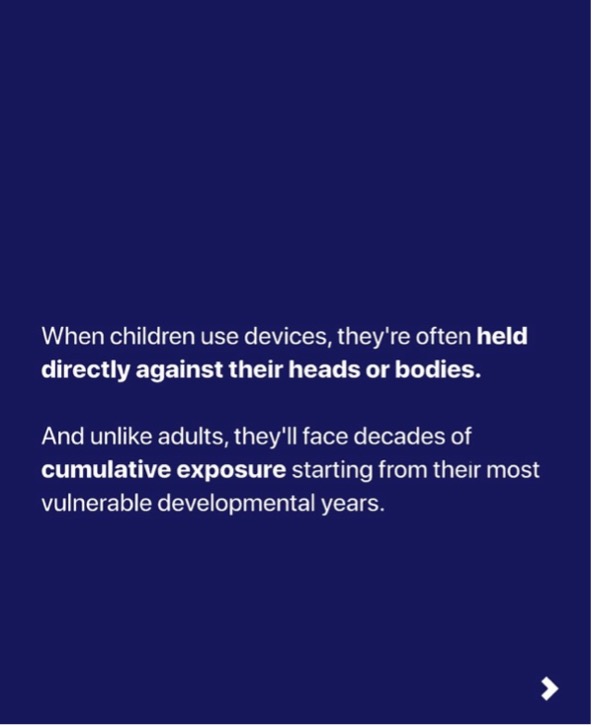
The post cites Dr Om Gandhi, a professor of electrical engineering at the University of Utah, alleging that children should avoid using mobile phones due to health risks. It suggests that as a 5-year-old child’s skull is only half as thick as an adult’s, it allows mobile phone radiation to reach deeper into their developing brain as compared to adults.
We investigated the claim and found that while it contains elements grounded in real scientific studies, it ultimately presents them in a misleading manner.
It is accurate that a child’s skull is thinner than that of an adult, and their brain tissue tends to be more conductive. This has prompted research into how radiofrequency (RF) electromagnetic fields — the non-ionizing (not harmful) radiation emitted by mobile phones — interact with children’s anatomy. The study from Dr Gandhi, published in 1996, used computer modelling to show that children may absorb more RF energy than adults due to differences in skull thickness and tissue composition. However it stopped short of concluding that this theoretical increase in absorption will negatively interact with children’s health.
Subsequent studies we found on radiation exposure in children similarly supported the idea that children may experience higher specific absorption rates (SAR) in certain brain regions when using a mobile phone, but these findings did not conclude that the exposure poses proven health risks.
Major health authorities maintain that there is no conclusive evidence linking mobile phone use to adverse health outcomes in either adults or children. The World Health Organization (WHO) has repeatedly stated that, “to date, no adverse health effects have been established as being caused by mobile phone use”.
The International Commission on Non-Ionizing Radiation Protection (ICNIRP) — the body responsible for setting global safety standards — updated its RF exposure guidelines in 2020, explicitly stating that the limits are protective of all population groups, including children. Similarly, the U.S. Federal Communications Commission (FCC) affirms that mobile phones sold in the United States must comply with RF safety limits that are designed with wide safety margins and consider vulnerable users, including children.
In conclusion, although there is some basis for saying that RF energy can penetrate more deeply into children’s heads than adults’, the original claim overstates the implication of these findings and omits the scientific consensus that current mobile phone radiation levels do not pose a proven health risk. The post also lacks credible sourcing for its claims and makes an alarmist recommendation that is not supported by expert guidance. As such, we rate this claim as likely false.