A claim circulating online suggests that taking melatonin is linked to a 90% higher risk of heart failure, sparking understandable concern given how commonly the supplement is used for sleep.
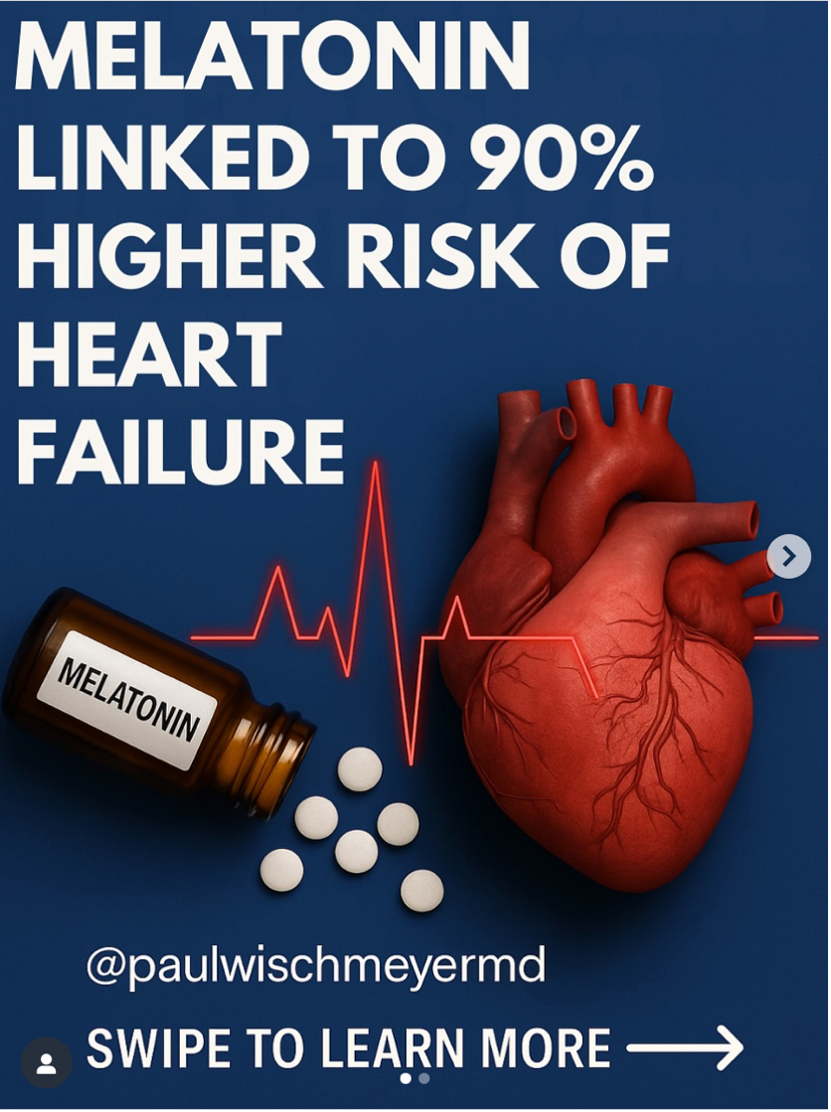
The claim originates from a large observational study presented at the American Heart Association (AHA) Scientific Sessions 2025, held from 7-10 November, where researchers analysed electronic health-record data from adults diagnosed with chronic insomnia. They compared those who were prescribed melatonin for at least a year with similar patients who did not take the supplement. Over a five-year follow-up period, the risk of heart failure was 4.6 per cent for those in the melatonin group, compared to 2.7 per cent for those who had no record of taking melatonin. In other words, people who supplemented with melatonin had a 90% higher risk of being diagnosed with heart failure.
However, framing this as evidence that melatonin causes heart failure is misleading. The study was not a clinical trial; it was an observational analysis of medical-record data. That means it can detect associations but cannot prove that melatonin itself is responsible. People who end up on long-term melatonin are often those with more severe or persistent sleep problems — and insomnia is already linked to poorer cardiovascular health. Other differences between the two groups, such as pre-existing conditions, lifestyle factors, or additional medications, may also contribute to the increased risk observed. Even the study’s authors and cardiologists commenting on the findings stressed that the results should be interpreted with caution.
Another important nuance missing from viral posts is that the research was presented as a conference abstract and has not yet undergone full peer review. Conference findings are often preliminary; methods can change, and results may be refined or even contradicted once a full paper is published. Without access to the complete dataset or detailed adjustment models, it is difficult to assess how robust the reported risk increase truly is.
This is a case where a technically accurate statistic — “90% higher risk” — can still be misleading when removed from context. The absolute risk difference appears small, and the study cannot isolate melatonin as the cause. What the research does suggest is that long-term melatonin use deserves closer scientific scrutiny, especially as its popularity grows.

For consumers, the takeaway is not to panic but to be informed. Occasional melatonin use remains widely regarded as low-risk, but anyone relying on it regularly and for long-term medication should discuss it with a healthcare professional.