In late December 2025 and early January 2026, a dramatic video began circulating on social media purporting to show a leopard chasing and attacking a moving passenger train near Amravati, a city in India. The clip was widely shared on platforms such as X, Facebook, and Instagram.
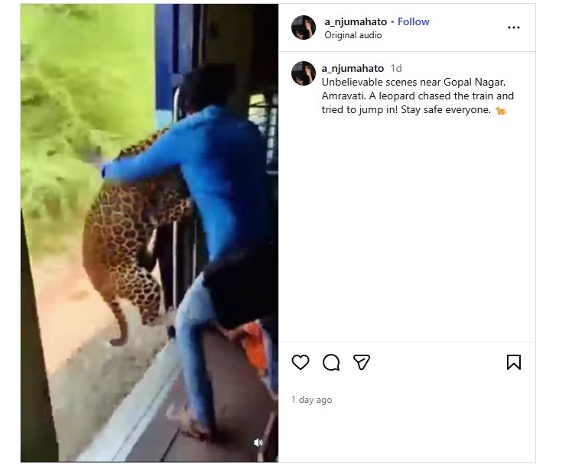
When we investigated the footage however, we found various typical deepfake artefacts in the video, including unnatural movement and visual distortions, pointing to evidence of the video being AI-generated. There were also no reports from local authorities or mainstream news outlets confirming such an attack.
The misinformation gains added plausibility because real incidents of leopard attacks on humans in India have been reported in recent weeks and months, particularly in parts of the Himalayas where humans are frequently in close contact with wildlife. For example, in the Nainital district of Uttarakhand, a 35-year-old woman was mauled to death while collecting firewood on 2 January 2026 — the third fatal leopard attack in that area within a single week — prompting villagers to protest and demand swift action against the animal. A day later, another woman was attacked inside her cowshed near the same village, further heightening fear and leading residents to urge authorities to declare a disaster.
These real cases reflect a broader pattern of human-leopard conflict in India and neighbouring regions, which arises largely because leopards increasingly venture into human-dominated landscapes as their habitats shrink and prey species decline. Studies and historical data show that states such as Gujarat, Maharashtra, Uttarakhand and West Bengal experience some of the highest levels of such conflict, with leopards responsible for regular reports of livestock predation and occasional attacks on humans.
Because leopard attacks on humans are neither unprecedented nor exceptionally rare in India, claims involving dramatic predator behaviour can seem more credible to people unfamiliar with the specific context or timeline. That dynamic likely helped the AI-generated leopard-train video gain traction, as social media users may have been primed by recent real reports to believe that such an event could happen. This pattern mirrors other wildlife-related misinformation we have encountered. Earlier in 2025, we investigated a widely shared video claiming to show a lion sniffing a sleeping man on the streets of Gujarat, a clip that we later debunked as AI-generated.
While the creator of the leopard video has not been identified and intentions are still unclear on any motives for spreading this misinformation, it must be noted that many similar videos of leopard and tiger ai-generated “attack” videos have been spread in recent months. Some of them were so realistic that the local police had investigated them, with the originators of the videos eventually being issued legal notices for spreading misinformation.
Although leopards do occasionally enter human areas and cause harm, something especially prevelant in India, there is no evidence to support the specific claim of a leopard chasing or attacking a moving train. The viral video is a synthetic and misleading deepfake, not an actual newsworthy incident verified by credible sources.