Multiple posts across social media channels including Facebook, LinkedIn, and Instagram have claimed that Singapore has installed vertical algae panels along highways to absorb carbon dioxide and clean polluted air caused by vehicle emissions.
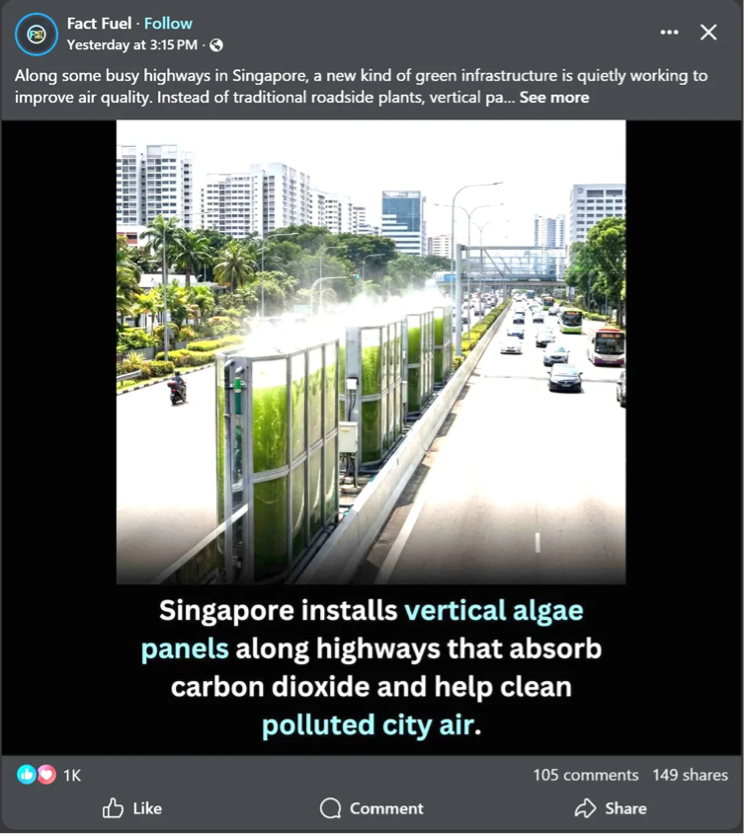
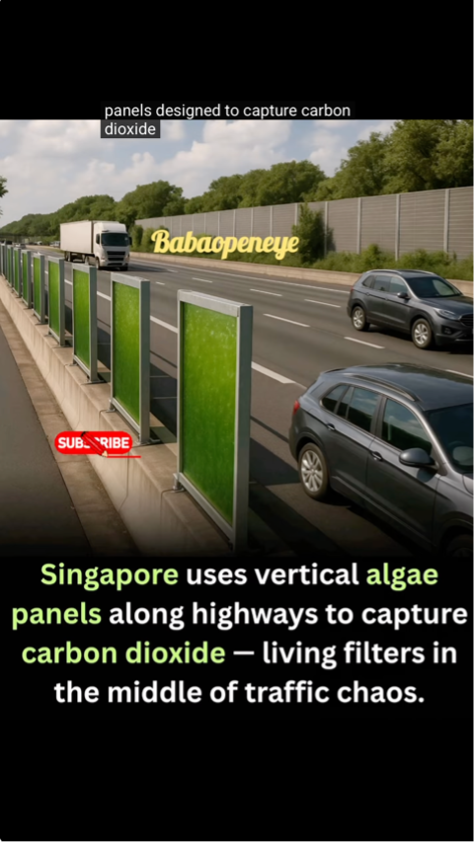
The posts use different images of the supposed “algae panels,” but all promote the same idea: that Singapore is so advanced and futuristic it has found a novel way to clean highway pollution. However, there are several reasons to doubt the visuals. When we analysed the images using AI-detection tools such as Hive Moderation, the results suggested they were very likely AI-generated. We had also previously investigated Fact Fuel, one of the Facebook pages sharing the claim, and found that it appeared to originate from Mumbai, India, and that most of the content it posts is also likely AI-generated.
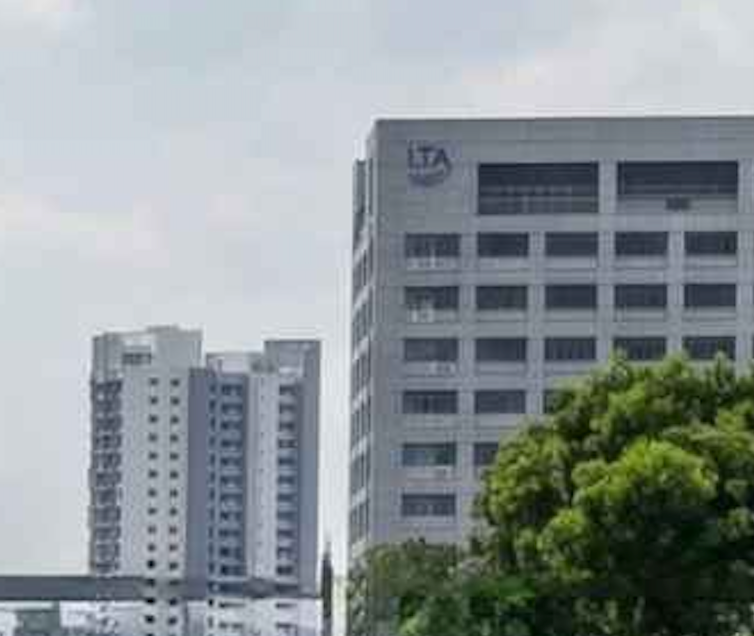
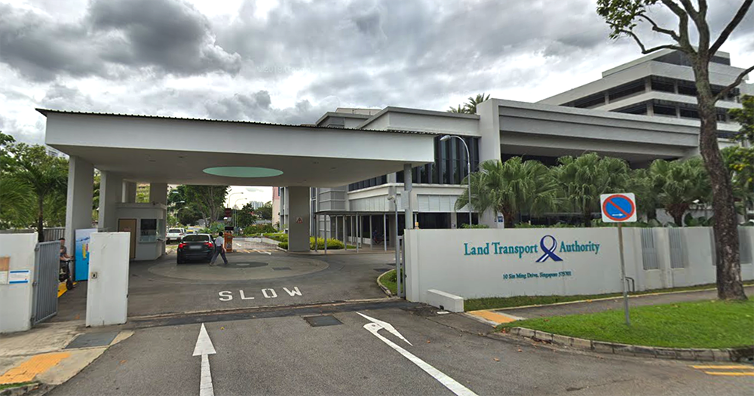
The problem is not limited to the panels themselves. The expressway backdrops shown in the posts also appear to be AI-generated, meaning the scenes do not point to real, identifiable locations in Singapore that can be checked on the ground. As a result, we are unable to visit any of the spots portrayed in the images to verify first-hand whether such panels exist there, because the locations themselves appear to be fabricated. In one image, zooming in on a building in the background reveals what appears to be an LTA (Land Transport Authority) logo. However, we could not identify any LTA building in Singapore that resembles the one shown, and the logo itself appears wrong, further suggesting that the image is not authentic.
Beyond the suspicious visuals, there is a more basic problem with the claim: there is no evidence that such panels have actually been installed anywhere along Singapore’s highways.
We found no announcement from Singapore’s Land Transport Authority (LTA), National Environment Agency (NEA), or other government bodies confirming the rollout of roadside algae panels for pollution control. LTA’s publishedsustainability materials discuss measures such as electrification, greener transport infrastructure and solar deployment, but do not mention algae-panel installations along expressways or roads.
NEA’s public materials also point to a different approach to managing air pollution. Singapore’s environmental agencies describe roadside and ambient air-quality monitoring, emissions control and other regulatory measures, rather than the use of algae walls beside highways.
In fact, one official Singapore government document outrightly dispels the viral narrative. In a “response to Singapore’s long-term low emissions development strategy” document from the National Climate Change Secretariat, the government states that the rate of CO2 conversion by microalgae is “significantly lower” than that of non-biological processes and is “unlikely to be suitable for deployment in Singapore.” That does not support the idea that Singapore has already installed algae-panel systems on a meaningful scale along busy highways.
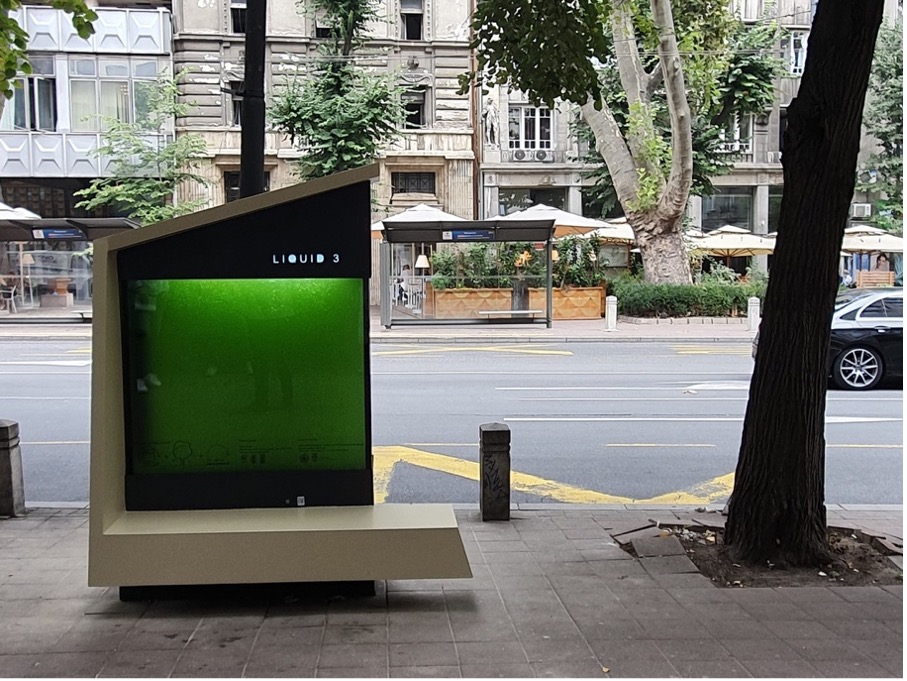
The claim may have been inspired by concepts or prototypes from outside Singapore. We found a 2021 article from the United Nations Development Programme on an algae air purifier being installed in Serbia. The purifier seems to be a one-off project at this stage however and there is no evidence of this technology being rolled out on a large-scale and in countries outside Serbia.
There is no credible evidence that Singapore has installed vertical algae panels along its highways to fight urban pollution. Official sources do not document any such project, and at least one government climate document indicates microalgae is unlikely to be suitable for deployment in Singapore for this purpose. The viral posts appear to rely on synthetic or misleading imagery and an invented narrative, not a real piece of Singaporean infrastructure.