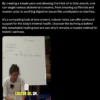
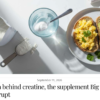
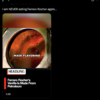
We came across several posts across Facebook, Instagram and X claiming that the Norwegian national football team brought 1,000kg of food for the 2026 FIFA World Cup because they did not trust American produce.
The posts, which have collectively garnered close to 270,000 views claimed that the food shipped included fish, cheese and oranges. Comments on social media posts questioned the quality of American produce with some claiming that U.S. food is toxic or filled with chemicals.
Given that Singapore imports more than 90% of its food, with the U.S. among its sources for dairy, meat and fresh produce, we decided to take a closer look at the claim.

What’s different about Norwegian produce?
To understand whether this claim holds up, it helps to first understand what makes Norwegian produce distinctive. Norwegian cuisine is built on the produce readily available in the country, and seafood plays a central role. Despite its small population of around 5.6 million, Norway is the world’s second-largest exporter of seafood. Brunost, a Norwegian brown cheese, is equally specific to Norwegian food culture. Made by boiling whey until its sugars caramelise, it produces a distinctive sweet, fudge-like flavour with no direct equivalent elsewhere.
As a member of the European Economic Area, Norway adheres to the European Union’s (EU) food regulations, which differ from those of the U.S. The two systems take different philosophical approaches. The EU applies a precautionary principle, where substances can be banned until proven safe, while the U.S. uses a “Generally Recognised As Safe” (GRAS) system, under which substances that experts broadly agree are safe under their intended conditions of use may be exempt from the standard premarket approval process. This means the list of approved food additives differs between the two jurisdictions, with some substances permitted in one system but not the other.
These regulatory differences provide some context for why a claim like this might resonate online. Certain substances approved in the U.S. are not permitted in Europe, and this has long been part of a broader debate about the two systems, with some arguing that European standards are more stringent and therefore produce better-quality food, though this is not necessarily the case according to experts.
Did the Norwegians bring their own produce?
Reports from media outlets in Norway have confirmed that the Norwegian men’s national football team brought its own produce and a team of 3 chefs to their base camp for the World Cup in Greensboro, North Carolina.
According to Norway’s seafood council, a state-owned marketing organisation under the Ministry of Trade, Industry and Fisheries, the team brought 500kg of Norwegian seafood, including salmon, trout, and crayfish, citing seafood’s nutritional value for player performance and recovery, as well as the players’ love of fish and shellfish.
One of the chefs who accompanied the team, Aron Espelund, confirmed to Norwegian media that the team brought seafood and Norwegian cheese but did not bring oranges, directly contradicting one of the specific claims circulating online. There is also no available evidence to support the 1,000kg figure cited in the posts.

Why did Norway bring its own food?
Espelund told Norwegian media that the food was brought out of pride in Norwegian produce and to make the players feel at home, not out of distrust of American produce. The team also sourced some ingredients locally in the U.S., including oranges for orange juice.
Norway is not alone in this respect. Argentina took approximately 900kg of beef to Qatar in for the World Cup in 2022, while Australia flew a dedicated barista to the same tournament to prepare up to 80 coffees a day for players and staff.
According to sports nutrition experts, such practices are common among elite athletes competing abroad. Teams bring their own food and chefs to maintain dietary consistency, reduce the risk of adverse reactions to unfamiliar ingredients, provide cultural familiarity and accommodate individual nutritional needs.
What about the broader claim that U.S. food is unsafe?
The comments accompanying the posts went further than Norway’s food choices, with some claiming U.S. food is toxic or filled with chemicals. Regulatory differences between the U.S. and Europe are real, but they reflect different philosophical approaches to food safety, not that U.S. food is automatically unsafe.
For Singaporeans specifically, U.S. food imports are subject to independent scrutiny by the Singapore Food Agency (SFA), which adopts a science-based risk assessment approach aligned with international standards. All food consignments imported into Singapore are subject to inspection, and shipments that fail to meet SFA’s requirements are rejected. U.S. food that reaches Singaporean consumers has cleared both American and Singaporean regulatory checks independently.
Therefore, we find the claim that the Norwegian national football team brought 1,000kg of food to the 2026 FIFA World Cup because they did not trust American produce to be partly false. The team did bring their own produce to the World Cup, but the rationale was not because of concerns of food safety, but to give their players access to food that they are more accustomed to at home.

Claims like these often work by attaching a motive to a factual action. Norway did bring food, but the leap from “brought food” to “distrusted American produce” was made online, not by the team itself. The broader narrative that followed, questioning the safety of U.S. food, illustrates how a single action can be reframed to support a pre-existing argument, in this case a long-running debate about U.S. versus EU food standards. When encountering claims online, it is worth being mindful of emotional framing as the same facts can be presented very differently depending on the motive behind the telling.