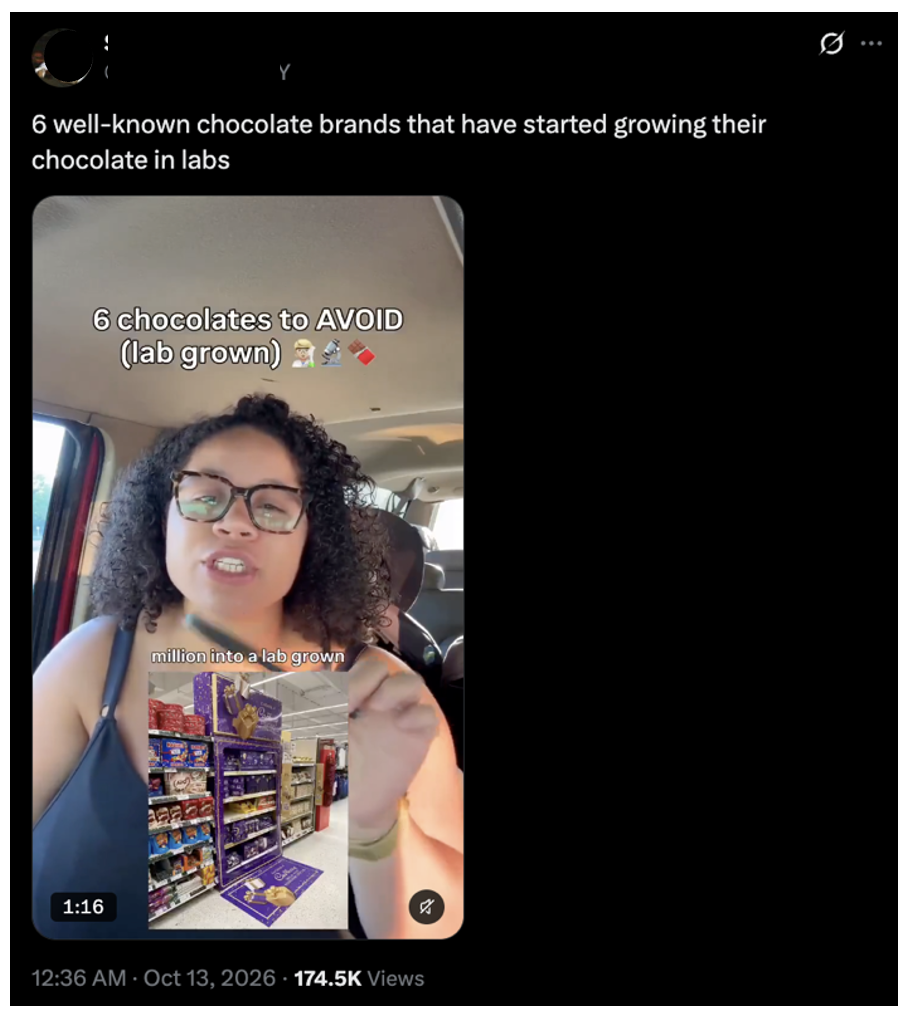
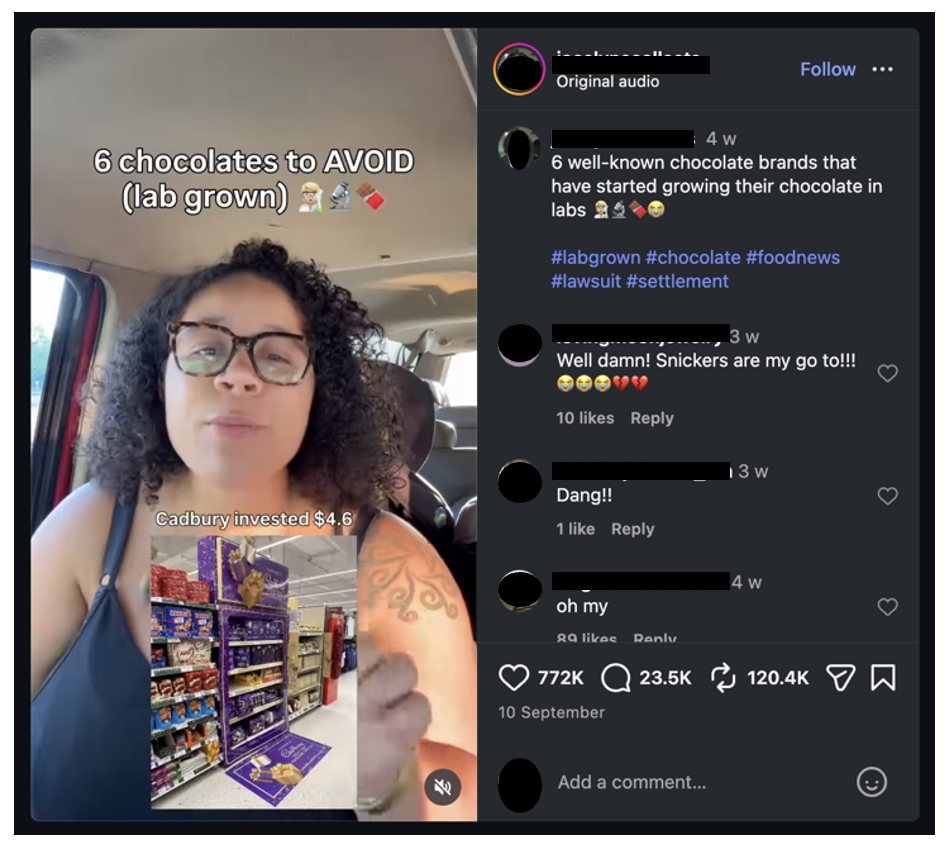
A video posted on X on 13 October 2026, which has drawn over 174,500 views, claims that six chocolate brands are starting to use lab-grown cocoa. The video was first posted on Instagram on 10 September 2026, where it has drawn over 772,000 views. In it, a woman lists Cadbury, Kit Kat, Lindt, Kinder, Snickers and M&Ms, and says each chocolate brand has invested millions into lab-grown cocoa. She advises viewers to read ingredient lists and avoid products listing “chocolate flavouring” or “cocoa compound”.
What is lab-grown cocoa?
Lab-grown, or cell-cultured cocoa is made by removing cells from cacao plants and cultivating them in a controlled environment such as a lab, rather than harvesting beans from farms.
Cocoa supply has become less stable in recent years. Cacao trees, the source of chocolate’s key ingredient, are easily damaged by drought and disease, and erratic weather linked to climate change has cut harvests and made yields unpredictable in major growing regions such as West Africa. Lab-grown cocoa is being explored as a way to ease some of these risks, but it remains in the early stages of development.
Are these brands already using it?
Lab-grown chocolate has been produced, but it is not yet commercially available. Celleste Bio, an Israeli start-up backed by Cadbury’s parent company Mondelēz, makes cell-cultured cocoa butter and aims to enter American and Israeli markets by the end of 2027, with Europe also on the horizon. California Cultured, a US-based start-up, is working with global food ingredients manufacturer Puratos to develop high-quality chocolate which can be used by professional bakers, pastry chefs and chocolatiers, which will be available to customers in the US towards the end of 2026. The American start-up is also working with researchers at the University of California, Davis to make cell-based cocoa powder and aims to begin commercial production in early 2027.
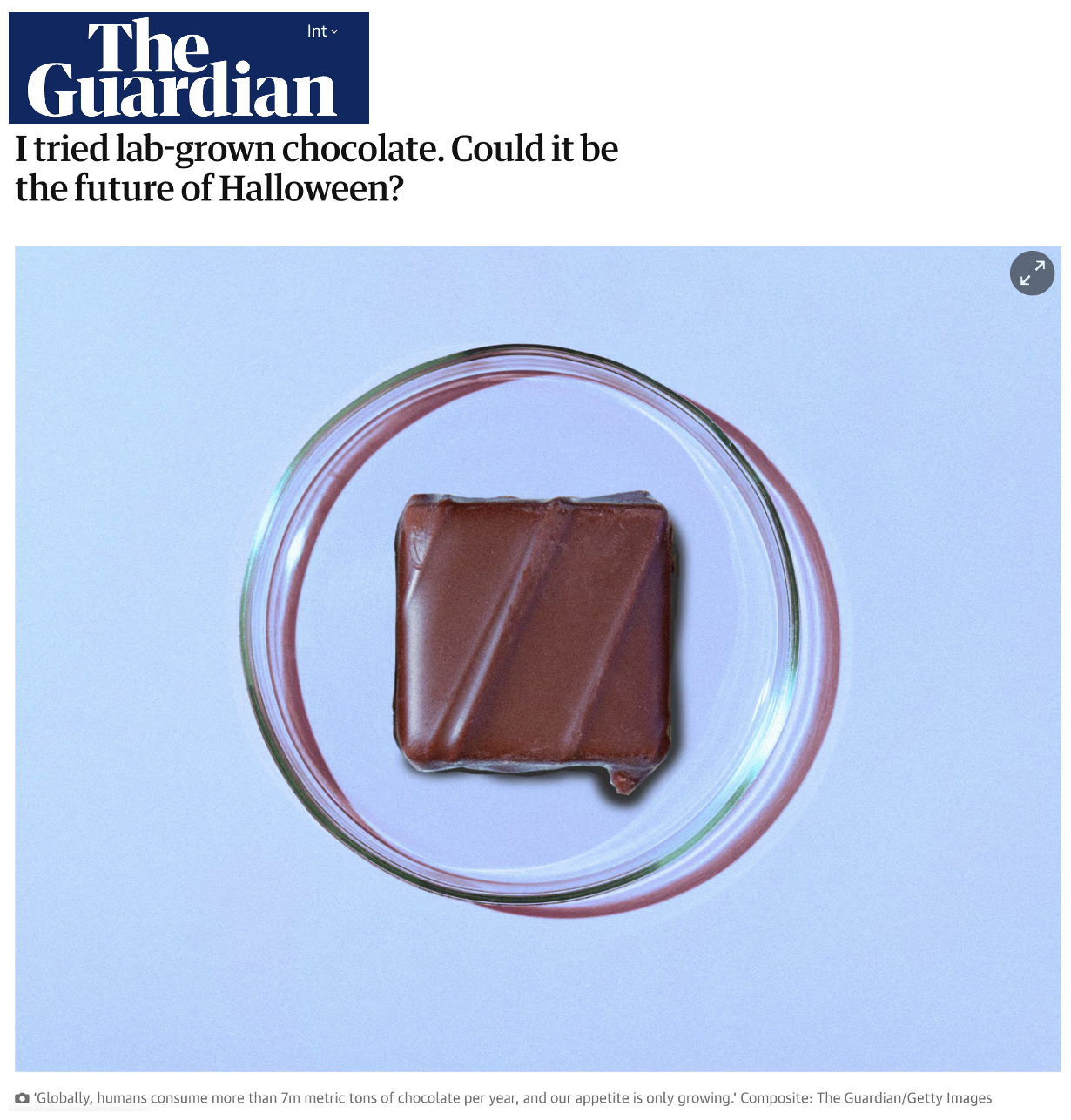
There is also significant interest from major global chocolate brands to invest in start-ups experimenting with lab-grown cocoa. Beyond Mondelēz’s investment in Celleste Bio, Lindt & Sprüngli (commonly known as Lindt) has backed Swiss start-up Food Brewer, which is exploring growing cocoa from plant cells, while Nestlé, which makes Kit Kat outside the United States, has been reported to be exploring limited cocoa alternatives.
It is important to note that investing in start-ups or testing a technology is different from using it in products. From what we were able to find out, no brand currently sells chocolate made with lab-grown cocoa, and companies such as Food Brewer have said they are targeting regulatory approval before their cocoa reaches the market.
Do “chocolate flavouring” and “cocoa compound” mean lab-grown chocolate?
Neither term refers to lab-grown cocoa. Both describe conventional alternatives to real chocolate, and countries set strict rules on what can be sold as chocolate.
In Singapore, the Food Regulations define chocolate as a preparation of cocoa paste, cocoa powder or cocoa, which can include cocoa fat, sugar, milk solids and up to 5 per cent vegetable fat other than cocoa fat. Chocolate that contains any such vegetable fat must say so on its label, and a product with more vegetable fat than that would not meet the definition.
Cocoa compound, more commonly referred to as compound chocolate is a cheaper product made from cocoa solids, sweeteners, and importantly, vegetable fats such as coconut or palm kernel oil in place of the more expensive cocoa butter. In the US, the FDA sets standards of identity for products labelled as chocolate, and its labelling guidance calls for “chocolate flavored” on products where consumers could reasonably expect chocolate but cocoa is the sole source of chocolate flavouring.
Since lab-grown cocoa is not in products on shelves yet, it cannot show up on a label today, and we did not find clear guidance on how it would be labelled in future.
The video also offers no evidence that lab-grown cocoa is unsafe. Celleste says its cocoa butter performs identically to the conventional version, and California Cultured’s cell-based cocoa powder received “generally recognised as safe” status in the US in March 2026.
Hence, we rate the claim that major chocolate brands are starting to use lab-grown cocoa as partly false. While major chocolate brands have invested in lab-grown cocoa startups, lab-grown chocolate is in early development stages, and there is no evidence that this alternative is a regularly used ingredient in their products.

The cocoa industry’s interest in lab-grown alternatives is real, which makes a claim like this easy to believe. Further, claims that a favourite food is hiding something unsafe tend to spread faster than the facts behind them. Here, lab-grown cocoa is not yet in chocolate on shelves, and the labels the video flags have nothing to do with it.