
A video posted on X by Paul Saladino on 14 October 2026, captioned “The secret to growing taller?”, has since drawn over 245,000 views. Saladino is a wellness influencer who used to promote a carnivore diet but has since pivoted to a primarily “animal-based” diet, which he states consists of meat, fruit, and raw dairy.
The video tells parents what to feed their children to help them grow as tall as possible. It recommends meat (for its high protein content) and leucine, an amino acid that it says switches on mTOR (mechanistic target of rapamycin), a signalling system inside cells that responds to nutrients and helps regulate growth. It also recommends aged cheeses and egg yolks for their vitamin K2, a nutrient found mainly in fermented foods and some animal products, which it says keeps the growth plates from closing too early.
A follow-up post by Saladino points to a research paper showing that getting enough vitamin K2 can help children grow taller. Both the video and the post suggest that vitamin K2 helps children reach a greater height. Hence, we took a closer look at the claim.
What are growth plates, and what closes them?
Growth plates are areas of cartilage near the ends of long bones, such as those in the arms and legs, where bones lengthen as a child grows. They are active during childhood and adolescence, and close when growth is complete, as the cartilage is replaced by solid bone.
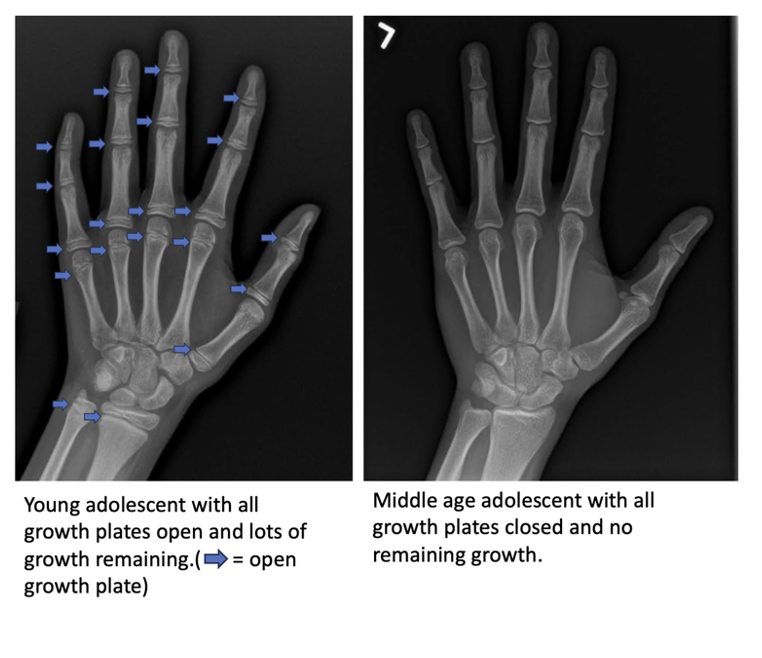
Image credit: WashU Medicine
Several factors, including sex, puberty, and nutrition, can affect how active the growth plates are and when they close. A 2020 study that looked at the growth plates of 958 healthy teenagers and young adults in Sweden found that they closed about two years earlier in girls than in boys, and that closure was more advanced in those further along in puberty. Overweight and obese people were also modestly more likely to have closed growth plates than those of normal weight, which the authors suggest may be linked to hormones produced by fat tissue.
Growth plate closure is also influenced by hormones, particularly oestrogen, and a 2024 review in Clinical and Experimental Pediatrics says the detailed mechanisms “remain unclear”. The treatments it names as studied or used to delay closure are hormone- and drug-based, and none is a vitamin. We found no study showing that vitamin K2, from food or supplements, keeps children’s growth plates open or delays their closure.
Does research show that vitamin K2 makes children taller?
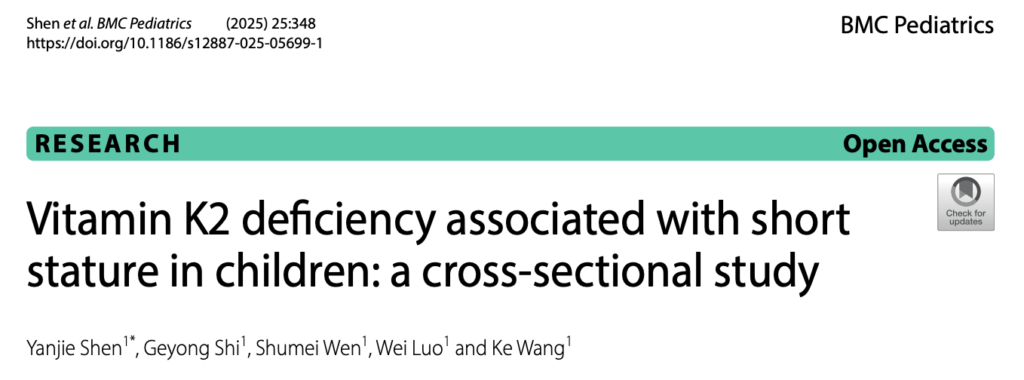
The study found in the follow-up post is a paper published in 2025 in BMC Pediatrics. The paper compared 730 children aged 3 to 16 at a hospital in China, grouped by how their height compared with other children of the same age and sex. It found that vitamin K2 deficiency was more common among children with short stature, meaning well below average height for their age and sex, than among children of normal height. However, the study measured vitamin K2 levels in the blood at a single point in time and did not record the children’s stage of puberty. It did not test whether giving children more K2 makes them taller, and the authors say longer-term studies are needed to establish cause.
A later study published in 2026 followed 1,150 children aged 6 to 14 in Vietnam from 2022 to 2025. 537 participants were administered a daily vitamin K2 supplement, which also contained calcium, magnesium and vitamin D. The study did not find conclusive evidence that the supplement supported overall growth, with a relatively marginal gain of about 0.05 cm a month that built up over time, and it was largest in pre-pubertal boys. The authors describe the findings as a possible link that needs further study, not proof that the supplement made a difference. The children were not randomly assigned, and there may be other factors affecting growth, such as how much the children slept and exercised. Two of the authors worked for a supplement company, though the paper states that they had no primary role in the study.
Neither study looked at vitamin K2 from food or at growth plates.
What about protein and leucine?
Multiple studies have found that genes explain most of why one person is taller or shorter than another, with environmental factors such as nutrition accounting for the rest. Within nutrition, protein does play a key role in healthy development.
The video goes further, claiming that the leucine in meat switches on mTOR and so makes children grow taller. A 2015 study in Science found that cells respond to leucine through mTOR, but it was a laboratory study and did not involve children. Laboratory research suggests that leucine and mTOR play a role in how cartilage cells grow, but we found no study in children showing that eating more leucine-rich foods makes them taller.
Hence, we rate the claim that vitamin K2 helps children grow taller as unproven. The study the follow-up post cites shows only a link between low vitamin K2 and short stature.

Health advice from social media personalities can sound authoritative when it cites a study. It is worth checking carefully what the study actually found before sharing or acting on it, and anyone with health concerns should consult a qualified healthcare professional.