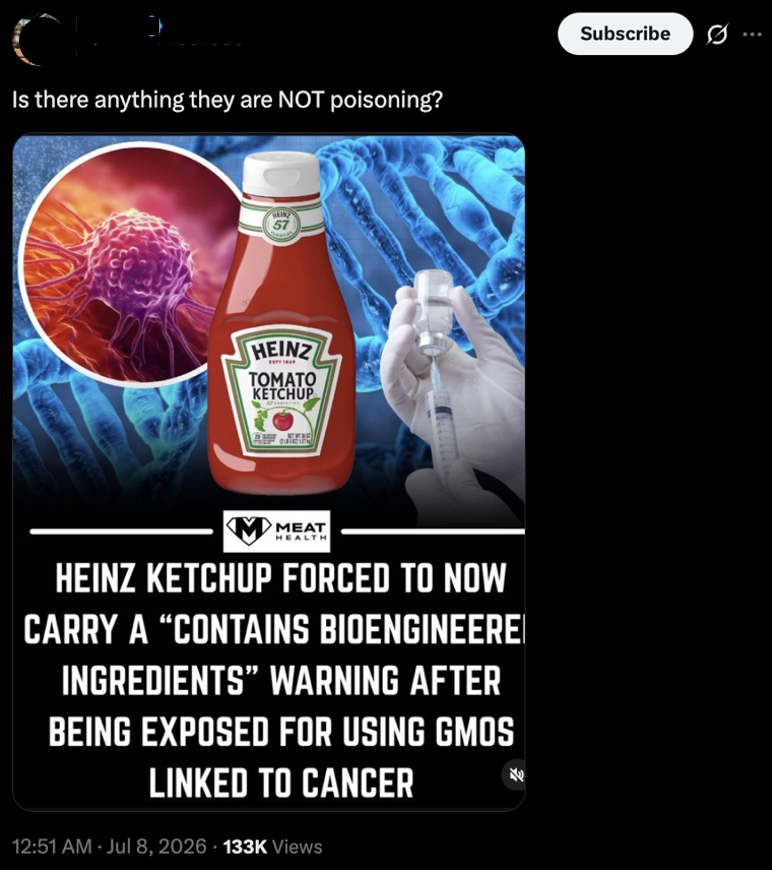
We came across a post on X published on 8 July 2026, claiming that Heinz ketchup has been mandated by the US government to include a “Contains Bioengineered Ingredients” label, after being exposed for using genetically modified organisms (GMOs) linked to cancer.
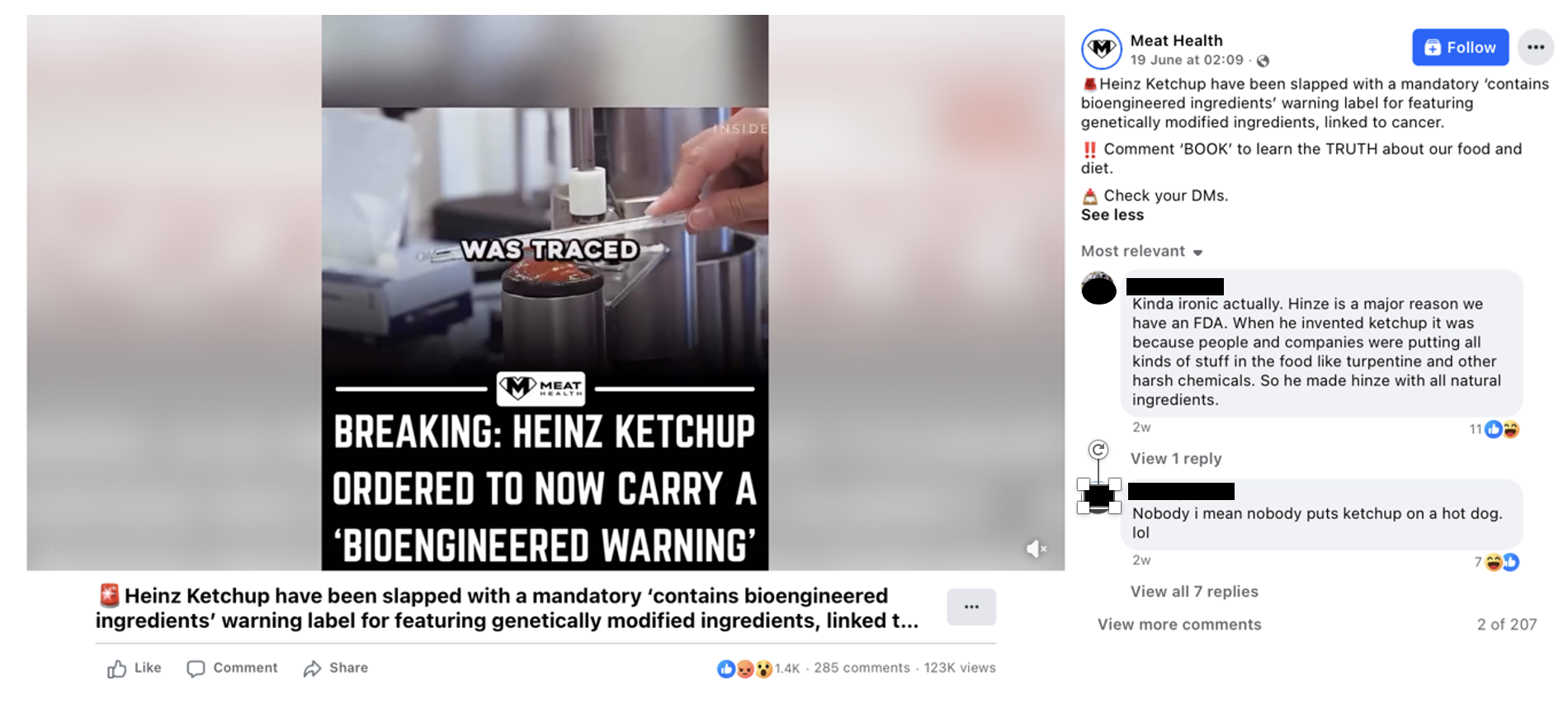
The post, which has garnered over 130,000 views in 24 hours, was accompanied by a graphic bearing the logo of Meat Health, a platform that promotes meat-based diets for fat loss, muscle building and general health.
Why Heinz?
Heinz tomato ketchup is widely available in Singapore, from supermarkets, restaurants and homes. It is also a brand that has been unusually prominent in public conversation recently, and not only because of this claim.
During the 2026 FIFA World Cup, taking place across Canada, Mexico and the US from 11 June to 19 July 2026, FIFA’s clean-site policy requires all non-sponsor branding to be removed or concealed inside host venues. While Heinz ketchup and mustard products are staples in stadiums in the US, it had to cover its logo with black tape, because it is not an official FIFA sponsor.
Rather than contesting the restriction, Heinz turned it into a marketing campaign, sharing images of the taped-over bottles on its social media and releasing a limited-edition logo-free bottle, generating more public conversation than many brands with official sponsorship rights.
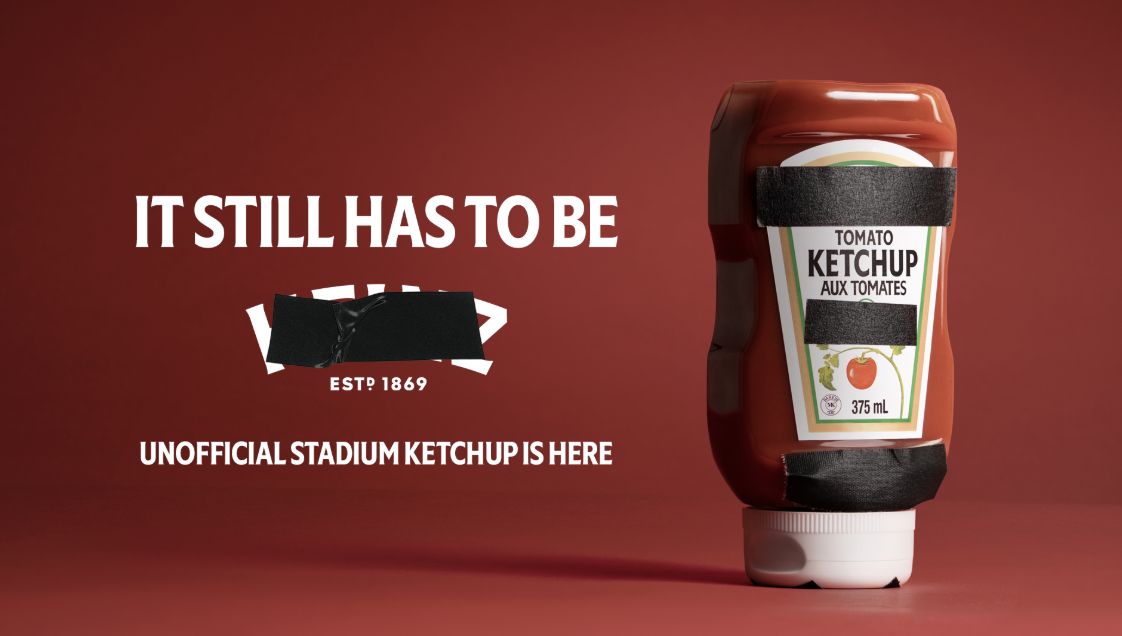
Image: LBB Online
Where did this claim come from?
We traced the graphic circulating on X to a video published on the Meat Health Facebook page on 19 June 2026. The accompanying post claims that Heinz ketchup contains GMO ingredients linked to cancer and therefore requires a “Contains Bioengineered Ingredients” label, while the video alleges that the sweetener used in the ketchup is derived from bioengineered corn and describes the product as “pesticide pulps liquefied in citric acid grown from black mold”.
Bioengineered food, also known as genetically modified organisms or GMOs, refers to crops whose DNA has been altered through genetic engineering to introduce specific traits, such as resistance to pests or viruses. These modifications are typically aimed at improving crop yields, reducing losses from environmental conditions, and making food production more stable and efficient.
For example, crops engineered to resist insect damage may allow farmers to use fewer insecticide sprays to protect their harvests.
Citric acid used in food production is commonly derived through fermentation using a naturally occurring mould. This is a standard and approved process used in thousands of food products worldwide. Citric acid is widely considered safe and is a permitted food additive in both the US and Singapore.
What is the “Contains Bioengineered Ingredients” label?
The “Contains Bioengineered Ingredients” label is real, but its origins are significantly different from what the post and video imply.
In October 2025, the US Ninth Circuit Court of Appeals ruled on a case called Natural Grocers v. Rollins, challenging the USDA’s National Bioengineered Food Disclosure Standard. The standard, established in 2018, required foods containing bioengineered ingredients to carry a disclosure label, but included a loophole: if a food had been so highly processed that modified genetic material was no longer detectable, it was exempt from disclosure. The court ruled this loophole was unlawful, finding that there is an important difference between whether a substance is actually present and whether a particular testing method is able to detect it.
Heinz’s standard ketchup line contains high fructose corn syrup and corn syrup, both derived from corn, and in the US, around 92% of corn grown is genetically modified. As such, because these are highly processed derivatives, they previously fell under the disclosure exemption. Following the court’s ruling, Heinz updated its labelling in compliance with the new requirement.
Critically, this was a transparency ruling, and not a safety ruling. The court did not find that Heinz’s ingredients are dangerous. It found that consumers have a right to know whether their food originates from bioengineered crops, regardless of how processed the final ingredient is.
The “Contains Bioengineered Food” label also applies primarily to products sold in the US market and does not appear on the Heinz ketchup bottles we reviewed locally. In Singapore, there is no mandatory requirement for products containing genetically modified ingredients to carry a specific label, though manufacturers may voluntarily label products as “GM” or “non-GM” if the information is factual and not misleading.
Are GMOs linked to cancer?
The claim that GMOs are linked to cancer is not supported by scientific consensus. The claim that GMOs cause cancer originated from a now-retracted 2012 study that used tumour-prone rats and flawed methodology.
Meanwhile, a 2026 comprehensive review of epidemiological evidence, by the Institute of Well-Aging Medicare at Chosun University in South Korea, found that current evidence does not support consistent causal links between GMO consumption and cancer, reproductive toxicity, allergies or other chronic diseases.
Multiple food and health agencies globally, including the World Health Organisation, the US FDA, and the European Food Safety Authority have all reviewed the available evidence and affirmed the safety of approved GMO foods, finding no credible link to cancer.
While the “Contains Bioengineered Ingredients” label on Heinz ketchup is real, it reflects a US disclosure requirement, not a finding that the product is unsafe. The claim that GMOs are linked to cancer is unsupported by the consensus of major health and regulatory bodies.
Therefore, we rate this claim as mostly false.

This claim illustrates how factual elements can sometimes be combined with unsupported claims to make them appear more credible at first glance. While the existence of a “Contains Bioengineered Ingredients” label is true, the reason behind the label is important. Examining the context behind a claim, rather than relying on a single detail that appears to confirm it is important when evaluating such health-related information.