We came across the following post on X by user @Fahadnaimb, an aviation-focused account, which has been viewed over 650,000 times since being posted on May 4 2026.
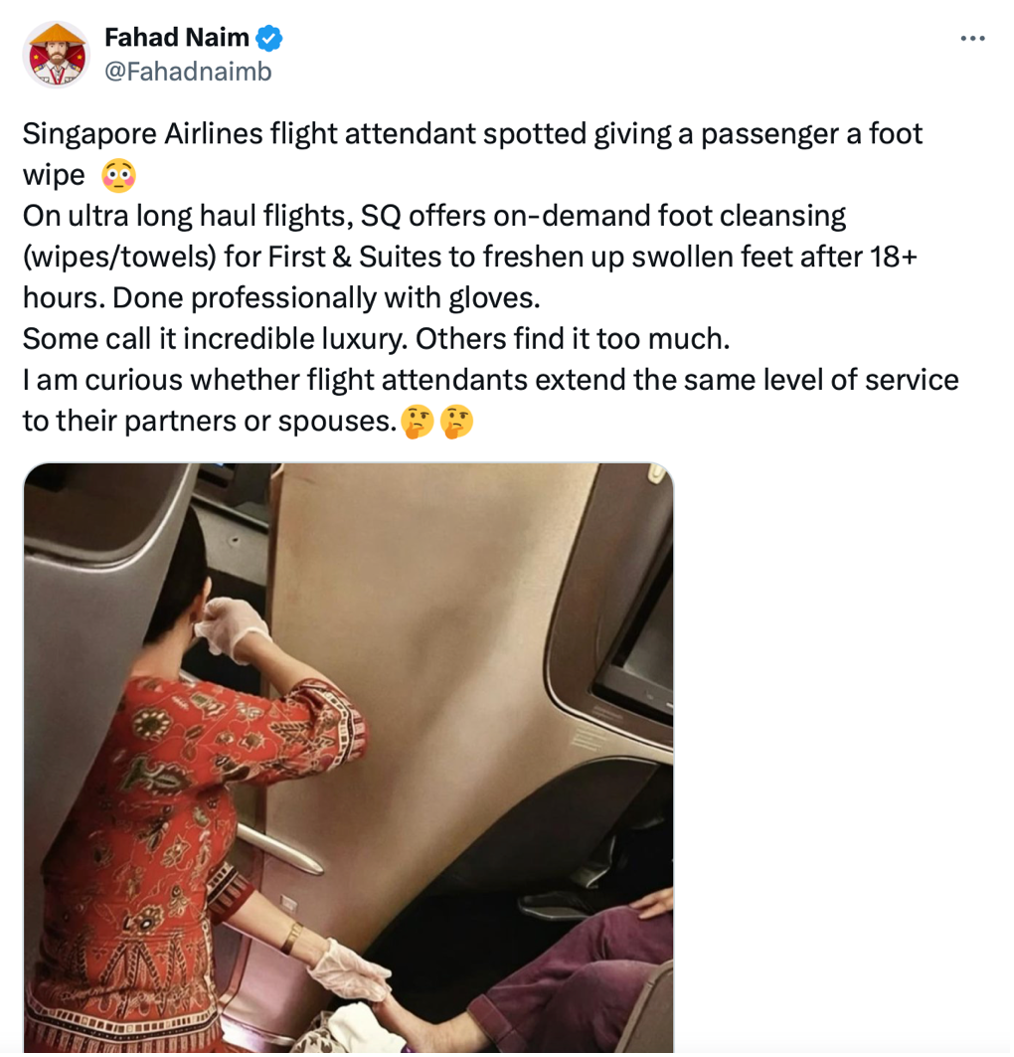
The post shows a photograph of a Singapore Airlines (SQ) crew member kneeling next to a seated passenger, apparently attending to one of their feet. According to the caption, the airline supposedly provides a dedicated foot-cleansing service to First Class and Suites passengers on flights exceeding 18 hours – a claim that, if true, would represent a significant departure from current airline service standards.
To verify the claim, we examined the photograph against SQ’s publicly documented cabin products and consulted aviation reporting on the matter.
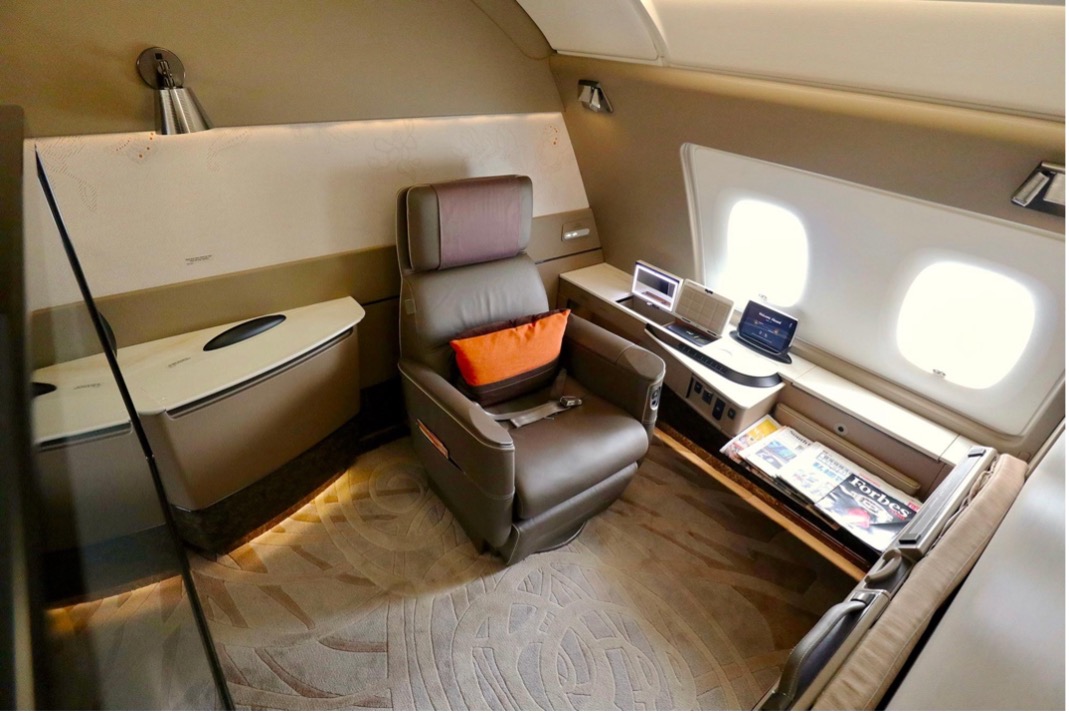
The cabin shown in the photograph is business class, not first class or suites based on the seat shell design, finish, and configuration. SQ’s Suites cabin on the A380 is laid out in a 1-1 configuration of six fully enclosed private rooms with sliding doors and floor-to-ceiling walls, and the airline’s First Class product on the 777-300ER consists of standalone and sealed seats in a 1-2-1 configuration which are not visible in the image. More tellingly, SQ does not operate a First Class or Suites cabin on its longest routes in the first place. The Singapore Changi Airport (SIN) to Newark Liberty International Airport (EWR) and John F. Kennedy International Airport (JFK) services, SQ’s only flights that exceed 18 hours are operated by an A350-900ULR in a two-class configuration of 67 Business Class and 94 Premium Economy seats only – no first, no suites, and no economy. The cabin class named in the post simply does not exist on the flight the post references.
Aviation outlet One Mile at a Time (OMAAT), which examined the viral claim earlier, concluded that the image most likely shows a crew member assisting with a medical situation involving a passenger’s foot, rather than performing a luxury service. We were unable to independently verify the precise circumstances of the photo, but the visual cues – a crew member crouched at floor-level briefly attending to one foot, no service trolley, no visible toiletry kit or branded amenity – are far more consistent with a one-off welfare check than with a standardised cabin service.
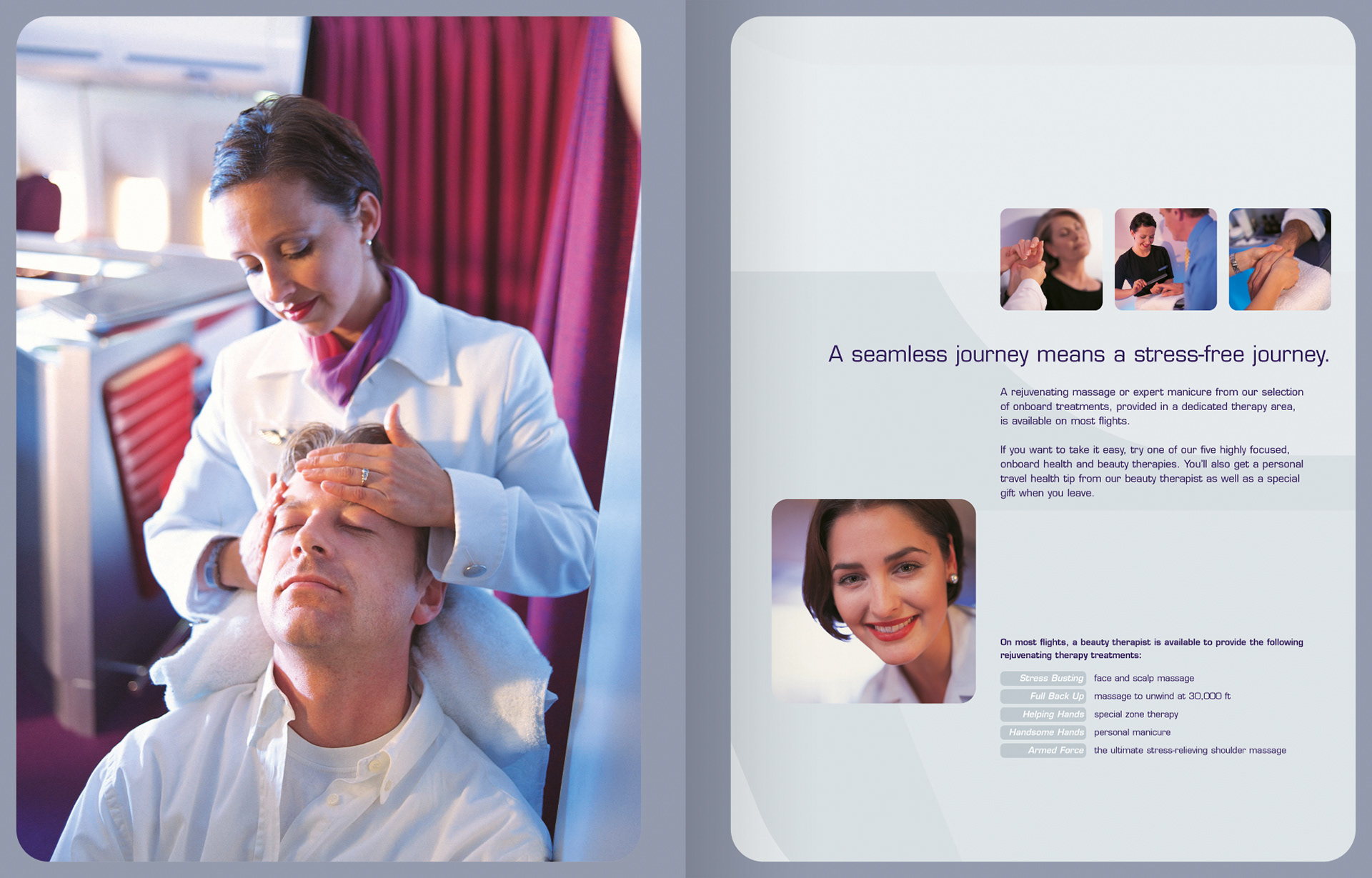
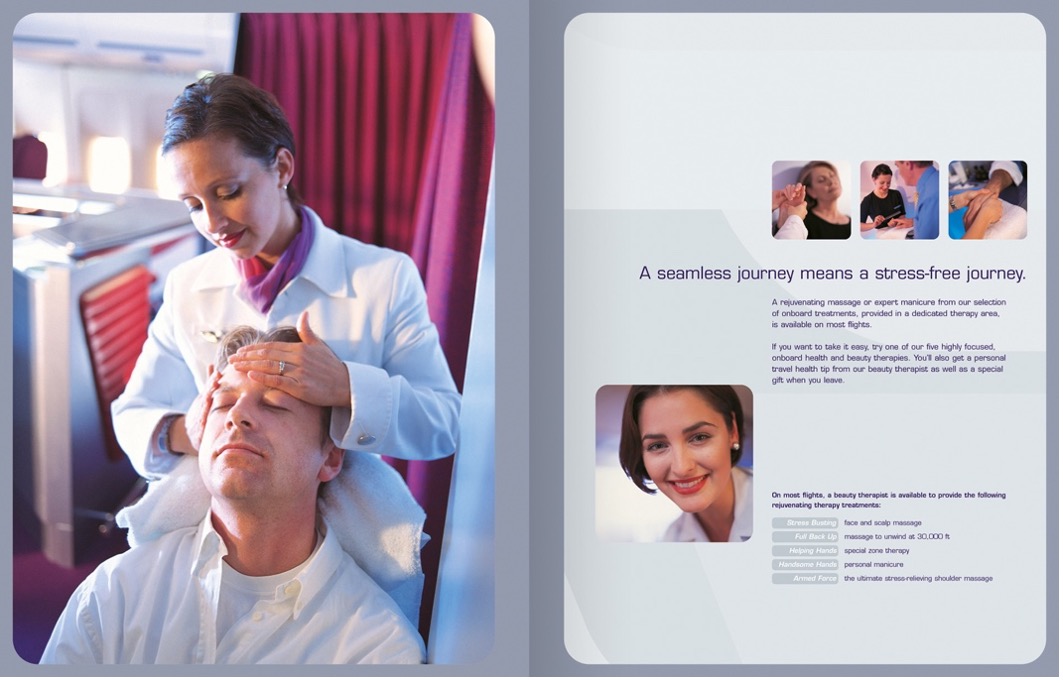
We also looked into whether any other airline currently offers an inflight massage or foot care product, in case the claim was a misattribution rather than an outright fabrication. We could find none. The last major carrier to operate such a programme was Virgin Atlantic, which from its inaugural Los Angeles flight in 1990 employed dedicated onboard beauty therapists to provide complimentary treatments – including the airline’s signature “Back In The Clouds” and “Handsome Hands Manicure” experiences – to passengers in its Upper Class cabin, Virgin Atlantic’s name for their Business Class offering.
By 2007, the programme had grown to more than 250 therapists, before the airline discontinued the service in 2008, redirecting investment instead to expanded treatments at its Heathrow Clubhouse on the ground. No major carrier has reintroduced an inflight massage service since. Some carriers do offer massage and spa services in their premium airport lounges, but these remain ground-based amenities. SQ’s own ultra-long-haul service offering, per the airline’s published product information, includes lie-flat beds, premium bedding, curated meals, and onboard Wi-Fi – but no foot care, massage, or personal grooming service of any kind, in any cabin class.
In summary, the claim that Singapore Airlines offers an on-demand foot-cleansing service to First Class and Suites passengers on ultra-long-haul flights is false. The cabin in the photograph is Business Class, not First or Suites; the ultra-long routes the post implies does not carry a First or Suites cabin in the first place; and neither SQ nor any other major carrier currently offers any inflight foot-care or massage service. The image most plausibly depicts a one-off welfare or medical situation, that was misrepresented on social media.