We came across a viral video showing how to “distinguish fake food from real food” on YouTube. The video, with over 170 thousand likes contains a section describing how coffee with additives floats on water while pure coffee sinks – showing it as a simple way to determine if your coffee powder has been adulterated with additional ingredients that might affect the nutrition profile of the coffee.
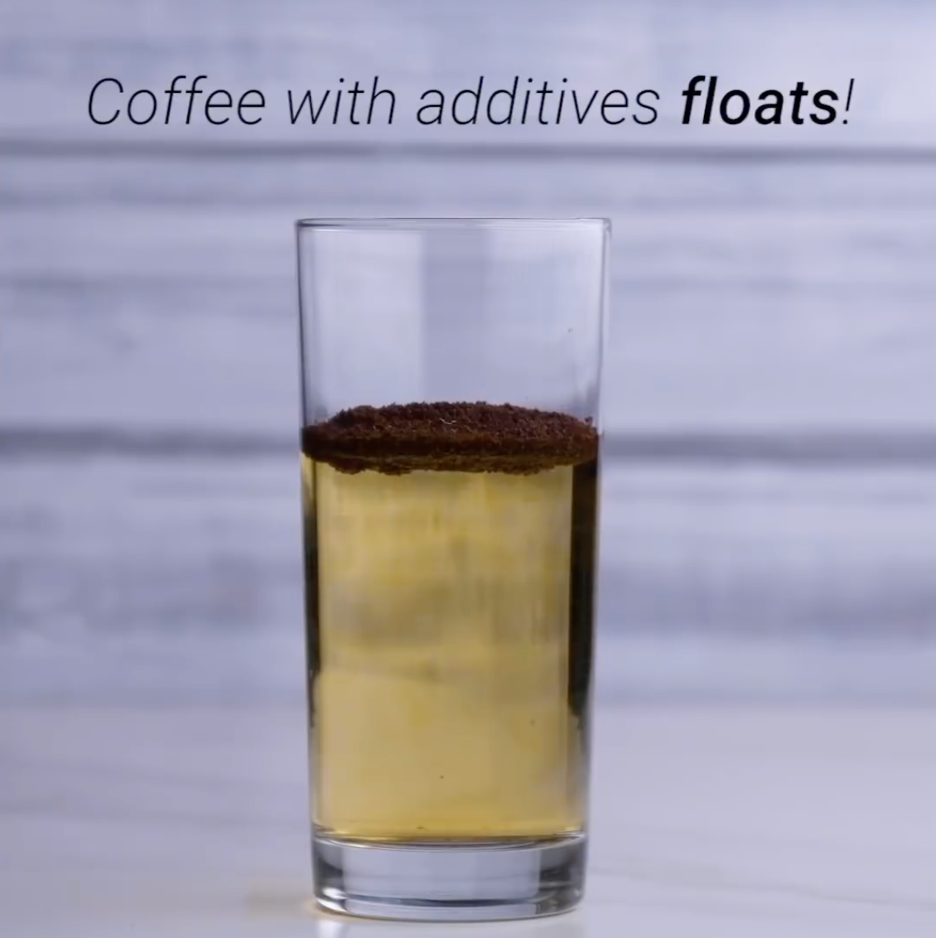
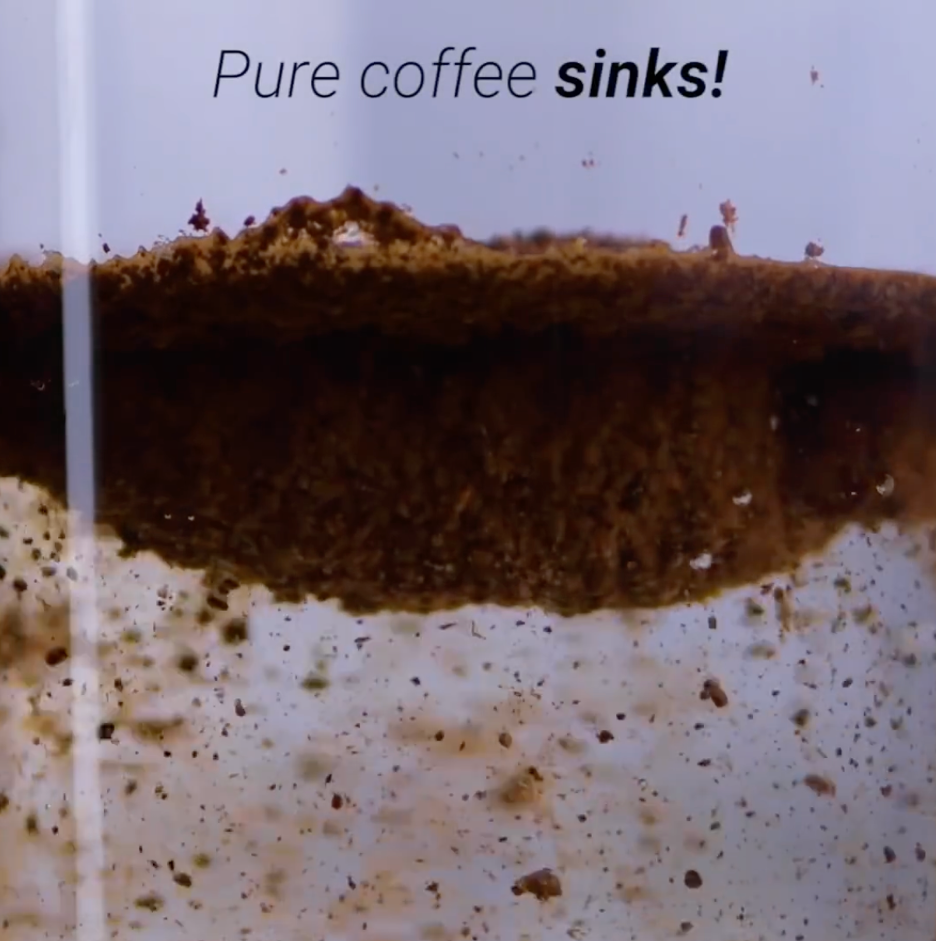
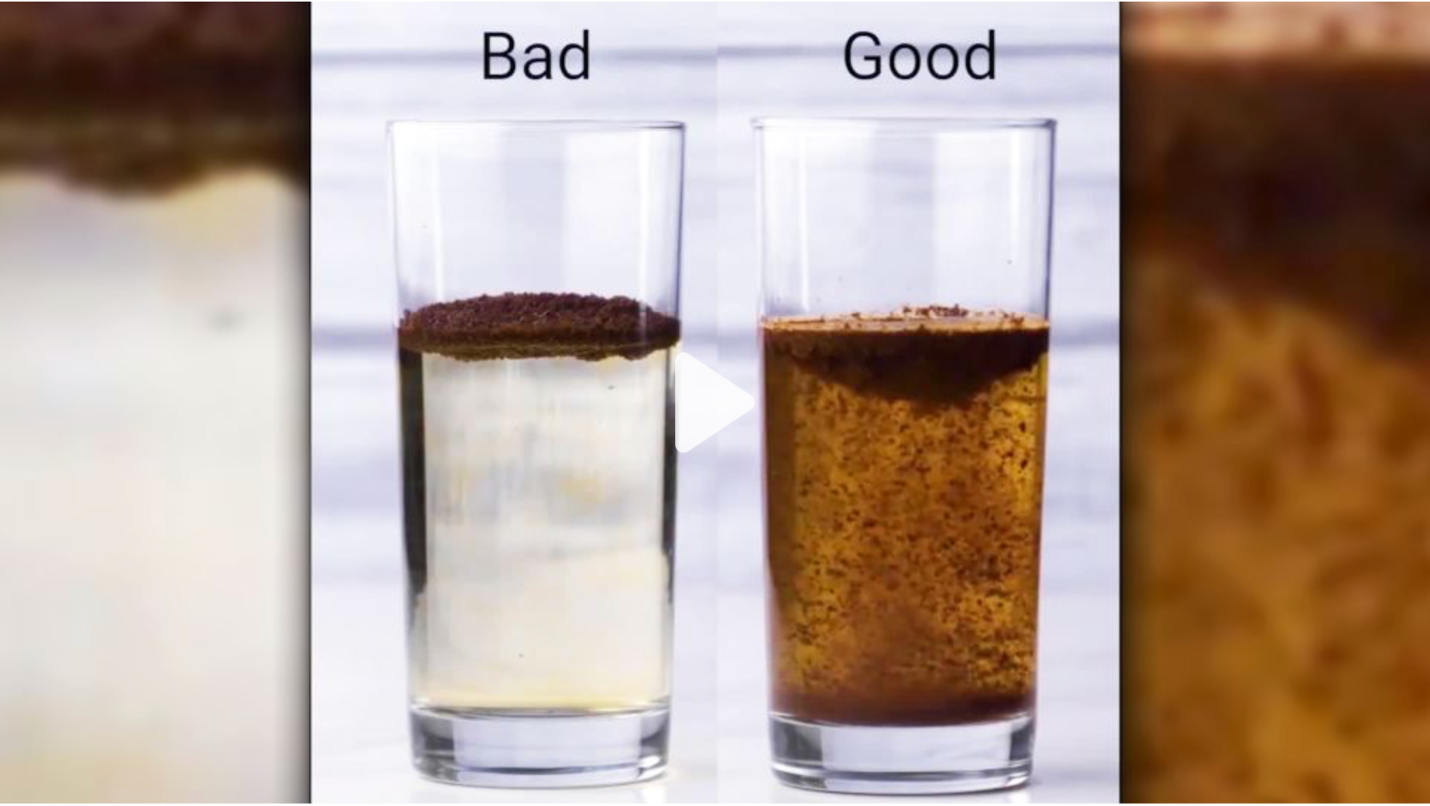
Tracing the claim to its source, it appears to have originated from a booklet titled Quick Test for Some Adulterants in Food from the Food Safety and Standards Authority of India (FSSAI), which describes a procedure for detecting chicory powder in coffee. The booklet states that, when stirred into a glass of water, chicory particles “begin to sink down within a few seconds” and “leave behind them a trail of colour, due to large amount of caramel” – behaviour distinct from coffee, which tends to remain on the surface for longer. The original guideline was therefore narrow: a rough at-home indicator for one particular adulterant in a country where coffee is commonly sold in coffee-chicory blends.
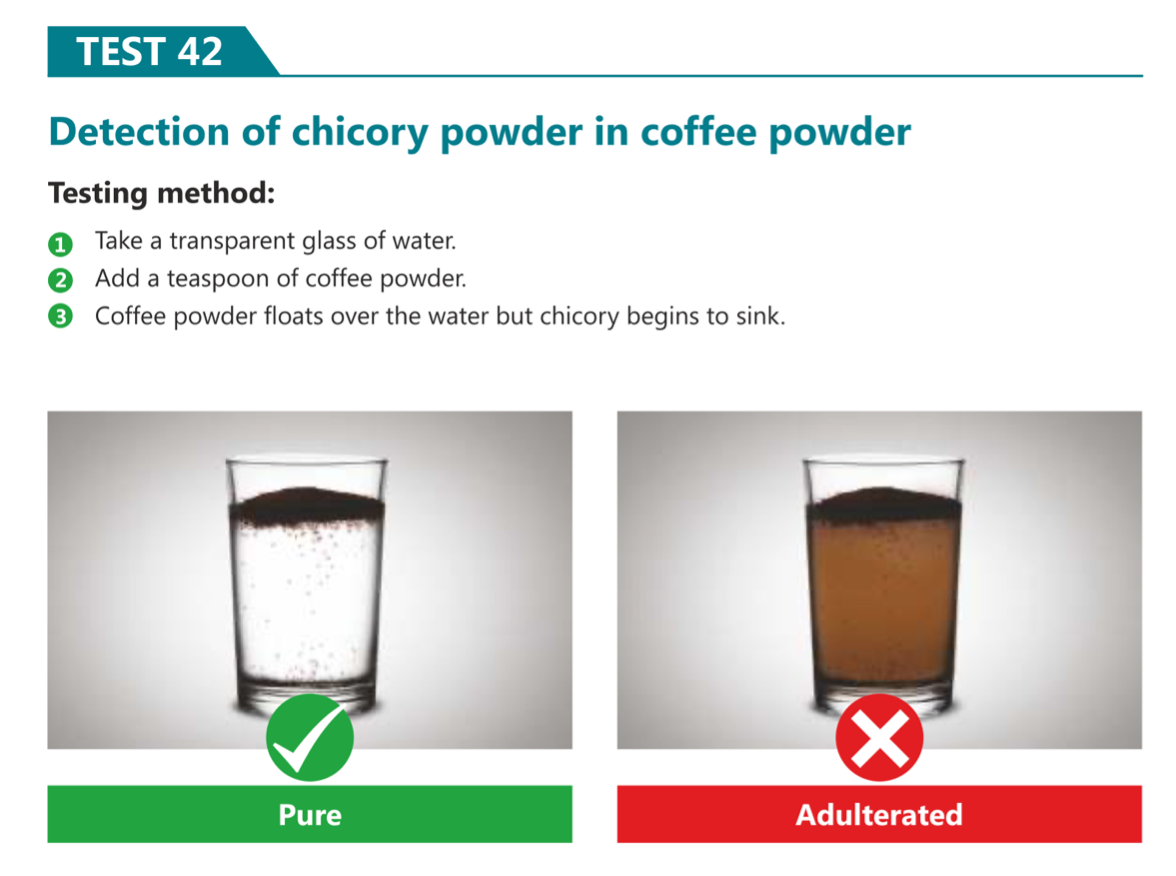
Chicory is a flowering herb whose roasted root has long been used as a coffee substitute and extender in India. It produces a dark, bitter brew superficially similar to coffee but contains no caffeine and is markedly cheaper to grow and process – qualities that make it both a legitimate blending ingredient and a vehicle for economic adulteration. The booklet’s flotation test was thus written for an Indian audience to detect undeclared chicory passed off as unadulterated coffee.
The flotation behaviour of ground coffee in water is in any case governed by factors that have nothing to do with adulteration. The most important being carbon dioxide. During roasting, complex chemical reactions produce large quantities of CO₂, which becomes trapped inside the bean’s porous structure. Peer-reviewed measurements by Anderson et al. (2003) in the Journal of Food Engineering found that fresh roasted coffee retains between 4.0 and 8.6 milligrams of CO₂ per gram, with roughly 40 per cent of that gas released within the first 24 hours after roasting and the remainder degassing over days to weeks. This trapped gas is what causes ground coffee to resist sinking when sprinkled onto water: it creates buoyancy and slows the wetting process.
As a consequence, the same brand of coffee will exhibit different flotation behaviour depending on how recently it was roasted, how dark the roast is, and how finely it has been ground. Darker roasts, with their more porous and brittle internal structure, degas faster than lighter roasts. Finer grinds wet and sink faster than coarser grinds. Older coffee, which has lost most of its CO₂, will sink faster than fresher coffee from the same bag. None of these variables have any bearing on whether the product has been blended with another ingredient. A consumer performing the additive test on a fresh dark roast and a stale light roast would observe markedly different results from two entirely unadulterated samples.
In conclusion, the claim that coffee with additives floats while pure coffee sinks is false. What the glass-of-water test reliably indicates is how much CO₂ remains in the powder which only measures how fresh the coffee is, and very little else.